Sunday, November 24, 2019

Monday Motivator #15 2019-20


Gratitude: A Powerful Tool for Your Classroom

By exercising the “gratitude muscle” with a journal, students can harness positive thinking to increase their grades, goals, and quality of life.

Would you like to improve the culture in your classroom and your life? Try gratitude. Based on my 10 years of teaching experience, this is the most powerful tool that I know.
Gratitude has empowered me to teach more effectively, appreciate my individual students, grow in my profession, and enjoy life. Utilizing gratitude, I am able to model one of the most important lessons in life, having a positive attitude, especially about the aspects of life that challenge me.

Gratitude Journal

To get started in your classroom with gratitude, I recommend actually writing your own gratitude list for a few weeks and feeling its power. Then you can share your example and start the activity with your students. You might start your gratitude journal with being thankful for being alive, for having food to eat and clothes to wear. If you can think about something related to teaching that you're grateful for, that's even more powerful

My students use a composition book and start every day by writing five gratitudes. If you have computers or iPads, you might have the students start a file to save their daily gratitude journal. By the end of the year, we each have almost 1,000 gratitudes. I show the students an example or let them see the form:

  1. Thanks for ___________________________.
  2. Thanks for ___________________________.
  3. Thanks for ___________________________.
Once a week, we go around the class and share our favorite gratitude. I am always encouraged and pleasantly surprised by what my students share. I get to learn about things going on in their lives that I might not hear about otherwise. This helps build a positive culture in our classroom.
In addition, I suggest that the students should be specific. For example, instead of writing, “Thank you for lunch,” I would write, “Thank you for the tomatoes and lettuce in my salad and for the cool, sweet iced tea with friends,” or “Thank you for the nutritious lunch made by loving hands.”

Exercising the Muscle

Gratitude seems to work like a muscle, and the physical act of writing a gratitude list helps develop gratitude muscles. And Professor Philip Watkins of Eastern Washington University says that those who are the least grateful seem to gain the most from making this effort. That’s good news to those us who may find it hard to start a gratitude list.
Sometimes I really challenge the students by asking if they can be thankful for homework or chores. This challenge enables them to see what is good about homework—that it helps them learn and prepares them for school and life.
In her article “Gratitude Activities for the Classroom,” Vicki Zakrzewski of the Greater Good Science Center lists many more gratitude activities to try in your classroom. This year, a new activity that I started in my classroom is writing down gratitudes on sticky notes and putting them on our classroom door, so that we have a positive reminder every time we enter and leave the room. Students will even take this idea home and post gratitudes on sticky notes around their homes, reminding them to stay grateful.

Visible Change

Recent research by two leaders in the field of gratitude and education, Dr. Robert Emmons and Dr. Jeffrey Froh, supports the idea that gratitude improves the lives of students and adults. They have found several benefits for students and adults.
Keeping a gratitude journal on a daily basis helps students achieve higher grades; higher goals; more satisfaction with relationships, life, and school; less materialism; and more willingness to give back.
Keeping a gratitude journal enables both students and adults to be more optimistic, experience more social satisfaction, exercise more often, have less envy and depression, have fewer physical complaints, and sleep better.
I see these positive changes in my students. One of them saved her allowance and bought gratitude journals for her family. Her mom was in nursing school and very stressed. At the dinner table, they would share their gratitudes for the day and grow as a family. The mom came to me and thanked me for teaching gratitude to her daughter and helping her family. She said it helped her get through nursing school.

Tapping the Potential

Dr. Kerry Howells, a leading researcher into gratitude and education, actually trains teachers to utilize gratitude in the classroom. Watch the following powerful video where she gives examples and evidence of the power of using gratitude in education:
I challenge you to try it yourself and see how it works. My friends who have written a daily gratitude journal for at least two weeks speak positively of the experience. Gratitude has transformed many lives. It is true that our focus can stimulate growth. If I focus on the good and I am grateful, more comes into my life. Conversely, if I complain and focus on the negative, more of that is drawn into my life. For me, the fruit of the focus on gratitude is happiness. Finally, check out Gratefulness.org for extra gratitude resources.

Research

Sunday, November 17, 2019

Monday Motivator #14 2019-20


ARE YOU A SODA KID OR A WATER KID? {NOTICING OUR REACTIONS}

We have lots of discussions about being proactive and thinking win-win.

One of the ways I like to make these ideas relatable, especially to some kids who struggle with these concepts the most, is to use analogies that they are all familiar with and can easily relate to.

My favorite question to ask these days is not, "Are your being proactive or reactive?" but is instead, "Is this a Soda Kid choice or Water Kid choice?"

Let me help explain by using the Anchor Chart we made in class:


All kids know what happens when you shake a can or bottle of soda: it explodes! All over the floor, your clothes, your hands.... everywhere! It's a mess and takes a long time to clean up.

But what happens when you shake a bottle of water and then open it? Nothing! The water is just water- ready to drink and enjoy (and as one of my thirdsters pointed out, it's much healthier for your body than soda is, too!).

So how does this relate to our class and our personal reactions when life happens, situations are out of our control, or it feels like we're getting shaken and thrown around in all different directions? When your reaction comes out, is it one of soda or water?

Soda choices are made spur-of-the-moment, usually pure reaction, and are often filled with anger. They are messy and it usually takes a while to "clean up" and repair the harm. Water choices, however, are calm and in-control, even despite the hardest shaking. We spoke about how our bodies even feel like soda or water on the inside, especially in the heat of the moment, and talked about some of our Brain Break and cool-down strategies to get our body to water when it feels like exploding soda.

I set up this chart like I usually do when I compare two things, in a T-Chart. This was ready to go when we began our discussion and we brainstormed as a class how one type of person would react versus the other.


It was a very concrete and helpful way for kids to see proactive versus reactive thinking and, now that it's hanging in our classroom, we can refer back to it throughout the weeks ahead and simply notice where their reaction is falling: Soda or Water?

https://www.3rdgradethoughts.com/2015/11/are-you-soda-kid-or-water-kid-noticing.html

Sunday, November 10, 2019

Monday Motivator #13 2019-20


November 8, 2019 The Gift of Noticing

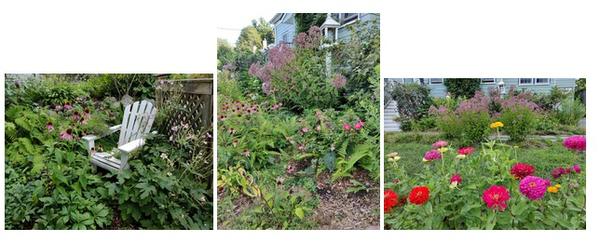
I was away from home and realized I needed a photo of my garden for an upcoming blog post. I texted my neighbor who loves photography for help, and within an hour, I had three photographs of my garden in hand.
As I stared at these pictures, I couldn’t believe what I saw. Instead of seeing unruly weeds, flowers that needed dead-heading, or plants crowding out more fragile ones, I saw a beautiful garden—a peaceful place that looks like it receives attention and care. This moment made me realize that I need to spend more time admiring, and less time fixing. My garden isn’t a “to-do” list. I created it so our family could enjoy it together.
I realize this happens at school too. When I walk into someone else’s classroom, I notice the classroom community the teacher and students have created. I see the recent read alouds, the student-created charts, and the student artwork that covers the walls.  As I get ready to teach, the kids tell me how things work.
“Our reading bags are over here.”
“Before we begin reading workshop, we set up our spaces and choose what we want to read.”
“I sit up here so I can see the chart.”
Their directions show how empowered they feel and how proud they are of their classroom community.
When your school “to-do” list feels long, please take a moment to notice what you and your students have created together. Notice how your children listen as you read aloud, the productive buzz during writing workshop, and how excitement builds as students share the books they are reading. These noises and silences tell a beautiful story with moments to cherish.
I’ve been doing the same thing throughout the fall when I’ve arrived home from work. I walk through the garden and notice its beauty—the flowers, the birds, and the way it all works together.  If we take a little time to notice the beauty of what we’ve worked hard to create, perhaps our to-do lists will feel a bit shorter.

Sunday, October 27, 2019

Monday Motivator #11 2019-20

October 25, 2019 Candy Bombs

By Brenda Power
There’s nothing as cozy as a piece of candy and a book.
                                                   Betty MacDonald
“This is my corner,” Kim Kabrich, an interventionist, said as she showed me her office. It was literally a corner, constructed with partial walls to create a space for Kim. Once you sit down, you forget that it’s a corner because Kim created a warm place to plan and have conversations with colleagues. It’s easy to get lost in deep conversation, until your train of thought is broken by voices on the other side of the wall.
Because of the partial walls and the fact that Kim’s office is in the heart of the building, just off the media center, it’s easy to catch conversations from others. The voices are close, and the conversation is meant to be private. Kim reaches for some candy out of the dish in the center of her table and announces, “Incoming!” and then tosses the candy over the wall.
There are giggles and Kim adds, “Hope you have a sweet day.”
“Thanks!” comes over the wall and we don’t hear any more of the conversation.
I smile at Kim. “Now there’s a tactic to avoid negativity—bombard people with candy!”
Kim laughed. “After school has ended for the day, you wouldn’t believe the things I hear. Some heartwarming stories of a caring student and some frustrating words from another. So I decided to toss candy, as an easy way to remind people that we need to have fun and keep positive.”
It’s not always easy to take a stand against negativity, but I like Kim’s approach. It makes me wonder how else we can take “sweet” stances against toxic conversations in our corners of the world. Perhaps candy bombs are just the beginning. Maybe they are also a great use of all the leftover sweets from Halloween many of us will face next week.

Sunday, October 20, 2019

Monday Motivator #10 2019-20

How To Handle A Student Who Rejects Your Kindness

Smart Classroom Management: How To Handle A Student Who Rejects YouYou give and you give.
You give your patience and humor. You give your positivity and respect. You give your heart and hope for their future.
And they discard it. They crumble it up and toss it in the trash.
They meet your smile, your generosity, and your kindness with indifference—and even cruelty.
They roll their eyes at your attempts to build rapport. They stare off into the distance and mumble when you try to engage them in conversation.
They laugh and make fun of your mistakes and generational quirks.
Yes, you’re their teacher. You’re paid to do your job. But it still hurts, more than you care to admit.
When you think on it—as you often do—when you think about this one student, and how you’ve gone out of your way to help them and give them the benefit of the doubt, anger seeps in.
A trickle at first, it turns into a rush as all the slights and sighs and sarcasms cycle fresh through your mind.
You daydream about putting them in their place. You lay awake rehearsing a lecture they won’t soon forget. You fantasize about running into them at Target in a few years and telling them what you really think.
But maybe, just maybe . . .  your kindness frightens them.
Maybe they’ve been burned so many times and so deeply that if they allow themselves to like you—or worse, look up to you—and you let them down, the blow would be too great.
Maybe they’ve erected a hard shell over shattered trust and the possibility of disappointment and betrayal.
So you breathe. You suppress your basest urges. You shake off the resentment you’ve been hanging on to and humble yourself with memories of your own pain and struggle.
You consider all that you don’t know about this student and what may await them at home—or what may not await them.
As you stand at the doorway to your classroom greeting students as they walk in, you notice them, head down, making their way toward you. They approach, and you soften. You nod and smile simply as they walk past.
Maybe this will be the day they accept you and let you in. Maybe it will be in a week or a month or on the last day of school. Doesn’t matter. You’re going to be the leader and model and strength they can count on every day.
So you give.
You give your patience and your understanding. You give your steadiness and your consistency. You give your unrelenting, unbending, undefeatable kindness.
It’s teaching, and it’s what we do.

Sunday, October 13, 2019

Monday Motivator #9 2019-20

Helping Students Deal with Distractions


We have had the privilege of spending the last few weeks in many teachers’ classrooms supporting them as they launch their literacy workshops. The first few weeks of school are so important for making the structures and routines you want to use all year long consistent and predictable. It is amazing how exhausting it is to teach 26 youngsters to follow directions, sit in the correct spot, find their materials, not talk to the person next to them, and read! One topic that comes up again and again with the teachers we mentor is student distractibility. Distraction can play out in many forms depending on the grade level and chemistry of the class, but the concern is common across many classrooms, schools, and districts.
Distraction is a reality of life—we get distracted by many things that tug our attention and time away from the things in which we want or need to engage. The average person gets distracted six to ten times every minute, and research is also being conducted to study what is happening to the human mind in our current culture of multitasking. Over a century ago, psychologist William James asserted, “The human mind can’t actually focus on any unchanging object for more than a few seconds at a time. Focus is a paradox—it has distraction built into it. The two are symbiotic; we need both.” When we think about students in classrooms, it is no wonder they are distracted. It’s time to talk about focus with our students, embrace distraction, and discuss strategies we can use to concentrate on literacy tasks despite distractions. Here are some lessons we have been using to help kids focus:

It Happens to Everyone

As I sit in front of 26 sets of young eyes, I begin to talk about distraction: “Sometimes when I am reading, I get distracted. I hear something and look up; or I remember something I was supposed to do and I think about going to do it; or my stomach rumbles and I think about what I want to eat for lunch. Does this ever happen to you?” Twenty-five sets of eyes look around unsure, but one set takes a risk and slowly raises his hand. “Yes,” I continue, “it happens to everyone.”
The risk-taker sits up a little straighter and asks,”Even teenagers?”
Trying to hold back the laughter, I look him straight in the eye and in the most serious voice I can conjure up reply, “Yes, even to teenagers.”
By beginning this conversation we make it safe to discuss it in the classroom. Rather than being frustrated by it as the teacher or embarrassed of it as the student, let’s just get the issue out there. Distraction will happen, it should happen, and it is happening. The most important question is What are we going to do about it?

Share the Research

“Did you know that scientists can now place probes on people’s brains to learn how we think and learn? One of the things scientists have learned is that the human mind is constantly being distracted from what a person is trying to attend to. This means that even if you are trying to pay attention to something, your brain becomes interested in paying attention to something else. One scientist explained, ‘We need to decide what we want to pay attention to, it just doesn’t happen. We have the ability to shift our attention and focus on what we decide is important. People who achieve great things choose to focus their attention on what they think is important.’
“Even Sir Isaac Newton, the famous scientist who discovered concepts like gravity (why things fall down) and the laws of motion (why things move), credits his discoveries to ‘having patient attention more than any other talent.’ This means that he thinks he made these discoveries because he chose to pay attention to these ideas for a long time.
“In readers’ workshop, it is easy to become distracted. You may see someone moving around, you may hear teachers meeting with other students, and you might begin to think about recess or lunch. Thumbs up if any of these things happen to you.” (Today I see lots of thumbs. I know I am making this a safe topic to talk about.) “Well, if it hasn’t happened to you yet, I promise it will. It happens to everyone, it is just how our brains work. We need to notice when it happens because if we do not notice it, then we cannot choose to refocus our attention on reading. If we want to be the best readers we can be and love reading, we need to teach ourselves how to focus our attention—just like Sir Isaac Newton. Everyone turn and talk to your partner about what tends to distract your attention from reading during readers’ workshop.” There is an explosion of conversation. We share ideas and build and add the chart titled Things That Distract Us.
“Today as you are reading, notice if you are distracted at any time. Noticing is the first step in understanding how attention works and learning how to choose to refocus our attention.”
We have found that it is powerful to share specific research findings with our students and explain why they are getting distracted. If they do not notice it is happening or understand why it is happening, then they cannot begin to use strategies to change it.

What We Can Do About It

“We have been discussing how our brains work over the last week and noticing what distracts us as we read. Yesterday, Adam shared that he was distracted during reading workshop because he saw the rain out the window and then began thinking about recess. He was wondering if it was going to be canceled. Many of you shared things that you found distracting. It is great that we are now noticing how our brains are working so that we can learn how to refocus our attention. A scientist named Dr. Desimone from the Massachusetts Institute of Technology has done research that shows we can train our brain to focus on what we want to focus on. It has been shown that we need to figure out what is distracting us and try to limit that distraction. If we become distracted, then we need to notice it and then refocus. Remember the chart we compiled of the things that distract us during reading workshop.”
Things That Distract Us During Reading Workshop
  • People talking
  • Teachers conferring
  • Announcements
  • People walking around
  • People moving
  • Things I am thinking about
  • What I can see out the window
  • My mind
  • Other books I want to read
  • Someone getting a tissue
  • Someone coming in the classroom
  • Talking to my friend
“Some of the things listed are things we can hear, some are things we can see, and some are thoughts in our mind. Turn and talk to your partner about one of these distractions and how you could help yourself not to get distracted. Let’s chart your ideas.”
Strategies to Focus Our Attention
  • Find a quiet spot to read
  • Try to not sit close to anyone
  • Plug my ears
  • Notice if I am distracted and refocus
  • Reread the section we missed in our book
  • Find books that we can really get into
  • Don’t sit near my friends
  • Try to block everything out
  • Make rules that we cannot walk around
“These are some great ideas. Today, during reading workshop, let’s try some of these strategies to focus our attention. Remember the most important thing is to notice when you are distracted, and then refocus and reread. We can train our brains to focus on what is important to us: our reading! Let’s see how it goes today.”
Our classrooms are always bustling with energy and activity. It is not realistic to expect our students to work without distraction. They need to move, chat, wonder, think, and eavesdrop from time to time. Is this behavior much different from what we do during a faculty meeting or staff development session? If we accept that distraction will happen, then we need to teach our students that “Attention is a finite resource. We are constantly making choices and we need to choose what we want to focus on” (Winifred Gallagher in Rapt: Attention and the Focused Life).  If we instill the love of reading in our students and find books our students love, we will have taken the first step. The next step is helping them each find strategies that help them focus their attention so they can become lost in a wonderful text.
To explore more of the attention and distraction research base, read Christine Rosen’s essays “The People of the Screen” and “The Myth of Multitasking.”

Monday Motivator #34 2025-26

  How Teachers Can Benefit From End-of-Year Reflections A teacher mentor shows why reflecting at the end of the year is so important for gro...