Sunday, May 19, 2019

Monday Motivator #36 2018-19

HOW TO FINISH THE SCHOOL YEAR STRONG


Dear Teacher,

I know you’re tired. You’re stressed. You’re about to stab a pencil in your eye if you have to grade one more paper.
Your to-do list is a mile long. And summer is so close you can taste it.
But in the midst of all the chaos and anticipation, I want to encourage you to do one thing:
Remember why you’re here.
You want to make a difference.
You want to help kids.
So pause a moment, look around, and really see your students.
Peek over your monstrous stack of papers to see the girl who’s lower lip is trembling in fear over the upcoming test.
Let go of your frustration long enough to notice the panic in the eye of the teen who just got busted for cheating – even though he’s desperately trying to hide it with his shrugged shoulders and bravado.
In a few short weeks when you’re lying by the pool soaking up the sun with a good book, what will you remember?
Will you have simply survived – finished your to-do list and washed your hands of the place?
Or will you have taken every opportunity to impact the lives of your students?
Because here’s the truth. This time, right now at the end of the year. This time can be the most valuable.
You know these kids. You’ve invested in their lives. You’ve built relationships.
And while they may be driving you up a wall, you are likely more able to speak into their lives now than you ever were before.
I promise the summer will be here soon. But until then, don’t phone it in. Don’t coast. Don’t go through the motions.
You only have a few more days to impact your students. Don’t waste that time. Don’t give up yet. These last few days can make all the difference!

HOW TO FINISH THE SCHOOL YEAR STRONG

  1. Don’t coast; instead, be more intentional. Don’t allow yourself to go on autopilot. Instead, choose to be intentional about making these last days count. Set one or two end-of-the-year goals and make it a priority to do all you can to influence your students during these last few days. 
      
  2. Keep first things first. When you’re overwhelmed and there are a million things to do, remember to keep first things first. Focus on what really matters and realize that the rest will get done eventually. (You might also want to try the intentional procrastinating to-do list system.) 
      
  3. Draw on relationships you’ve built. You’ve spent a whole year building relationships with your students and their parents, and as a result, you likely have more influence now than you ever did before. You may never get another chance to inspire them, believe in them, guide them, or counsel them. So take advantage of every opportunity you get to speak the truth and impact their lives. 
      
  4. Strategically prioritize what to teach. If you’ve got way more material to cover than you have time to teach, don’t just keep plodding along. Instead, sit down and decide what is most important for them to learn. Then focus on that. 
      
  5. Don’t plan to finish teaching too early. For those of you who are right on track and are about to finish your curriculum, I have a word of caution for you – don’t finish too early. One of my first years I finished my math curriculum a week early, planning review games for the last week. The problem was that once I told the kids we were done with the book, they turned into crazy people. Well, not really, but it was definitely much harder to keep them focused. Since then, I’ve scheduled the final test closer to the last day of school. 
      
  6. Communicate with parents. Don’t just turn in your final grades and walk out the door. Take the time to have one last communication with the parents of kids who have struggled in your class. Give them suggestions of things they can do over the summer to help prepare their student for the next year. Even if you don’t think they’ll heed your advice, taking a few moments to send them a final email shows them how much you care about their student. 
      
  7. Try to leave things as organized as possible. Notice I said try. Yes, there’s a bazillion things to do, but the more organized you can leave things now, the smoother things will go next fall. So take a few moments to jot down notes for yourself of what worked and what didn’t. And maybe even to tackle those disastrous desk drawers. (Do I dare even mention the closet?) 
      
  8. Decide to enjoy these last days. Simple but profound. Instead of counting every moment till you’re done, choose to enjoy these last days you have with this group of students. Soon school will be over and you’ll be relaxing. But this opportunity – your time with these students – will be done. So choose to enjoy these days while you have them and to view them as a gift. This one mental decision will impact everything else you do.
So teacher, this is your chance. This is your moment.
Take a breath, pray for strength, and make each day count.


Sunday, May 12, 2019

Monday Motivator #35 2018-19


May 10, 2019 Moments That Matter

We’re all looking for someone who knows who we are and will break it to us gently.
                                                                    Robert Brault https://choiceliteracy.com/article/may-10-2019-moments-that-matter/

This month I helped my friend Sandy brainstorm ideas for a commencement address. She was trying to come up with something brilliant to say in five minutes or less in front of 10,000 people who would have little interest in listening to her.
So, you know, no presh.
We sat at dinner for a couple of hours with our notepads and talked, thinking of all the cliches people say in graduation speeches. Finally, I asked her to tell me a story of a time when she connected with a student that touched her heart.
Sandy immediately went back over 30 years to her earliest days as a professor. Gary, a freshman at the time, showed up during her office hours and came out to her. Gary had not told anyone else he was gay. This was no small thing in the 1980s, at the height of the AIDS crisis.
Gary explained that a few weeks before, Sandy had been eating dinner with a bunch of students (including Gary) in a residence hall where she was the faculty mentor. Someone told a homophobic joke, and everyone laughed. Sandy said she didn’t find the joke funny at all, the laughter died immediately, and the conversation moved to another topic. It was in that moment Gary realized that Sandy was an advocate for gay students, and it gave him the courage to share his secret with her (and eventually others).
Here’s the thing. Sandy had no recollection of that dinner conversation and joke when Gary shared it in her office. She was just living her life, doing the mundane things we all do day after day—working, eating, chatting, and speaking out when she disagreed with something.
Her story made me think back to when I was a graduate student. The day I received my first writing rejection I cried, if only because the critique was so vicious. The anonymous reviewer said my writing was smarmy (I had to look up the word before I could understand how insulting it was). That night I went to a seminar with the professor who was my writing mentor, Donald Murray. He was talking about publication and I muttered something about how hard it was to get writing published. He chuckled and said, “Brenda, you’ll write a book someday. You can take that to the bank.” He continued on with the point he was making about working with editors. I sat up straighter and put that awful review behind me.
I’m sure Don forgot that remark as soon as he made it. His words changed my life anyway, just like Sandy’s offhand and instantly forgotten condemnation of homophobia changed Gary’s life. The days we live blur together, most seeming insignificant. It’s easy to forget what power we have to change the lives of others, and the influence those we admire have over us. What those mentors say to us one-on-one, how we observe them live their lives, can make all the difference in whether someone nurtures their talents and passions. Or has the courage to tell others who they are.
In May the flowers appear and the end of the school year rushes up like the ground when a plane is landing. The fears and doubts niggle at you. Have I done enough? Have I reached who I needed to reach? The beauty and curse of it is that you have, and you will also never know. The moments that mattered most to others are rarely the ones we remember. The encouragement and guidance teachers give moment to moment is as unconscious as breathing. And students will go on just living their lives, holding on to a moment or two of encouragement from you that you’ve missed in the midst.
Sandy ended up with a lovely little speech about those moments that matter that we know nothing about. She got over her nerves when she realized that the things we think are the most important markers of our lives, like giving a commencement address, really don’t matter much at all.
This week we look at ways to help students tell the stories they care most about. Enjoy!
Brenda Power
Founder, Choice Literacy

Sunday, May 5, 2019

Monday Motivator #34 2018-19


April 5, 2019 Black Diamond

Skiing combines outdoor fun with knocking down trees with your face.
                                                                                                                                                                                       Dave Barry
I have a pretty hefty fear of skiing down steep slopes. I know to avoid anything marked “black diamond.”  One unwritten rule in our family is, Don’t take Mom down anything scary. If you do, she will take hours figuring out how to butt-slide down the mountain. This incident will be embarrassing for you and everyone involved.
Last weekend, a friend tried to help me conquer my fears. Like a good teacher, she watched me ski and immediately realized how much I needed to learn. For the most part, she kept this very long list of learning goals to herself. She mentioned I didn’t how to use poles. This is correct. I have NO IDEA how to use them. She pointed out that my turns are very sharp. Right again. I make quick turns, so my skis point down the mountain for the shortest amount of time.
As she talked about what I could learn, she paused and then said, “Why don’t we work on your stance and your balance? Once your balance is better, you will feel more comfortable on the slopes.”
I didn’t know what that meant, but it sounded good, so I agreed. She explained, “Instead of looking at your skis and the snow right in front of you, keep your head and shoulders facing down the mountain. Pick a focal spot in the distance and keep your eyes fixed on that. The rest will come.”
Sounds pretty easy, right? Not so much. I practiced this single skill for hours. As I skied down the slope, I said to myself, Okay. Keep looking at that tree, and don’t look at your skis. Keep your shoulders and head facing down the mountain. Don’t worry. You know how to turn.
My friend chose a learning goal that would improve my skills and build my confidence, and then she let the rest go. She knew she couldn’t fix everything, and she didn’t try. She also kept the big picture in mind—this learner needs confidence, and this is supposed to be fun.
As I confer with students and review their work, I will remember the ski slope. Which learning goal will motivate this student to persevere? Which strategy will have the biggest effect at this point? What will practice look like if this student focuses on this one goal?
A learner can absorb only so much at a time, and it’s our job to choose wisely, give lots of opportunities for practice, and celebrate the learner’s approximations. We step back, watch, and celebrate the growth, despite the messiness that surrounds it.
I skied down a black diamond for the first time in my life.  I still don’t know how to use my poles, and my turns are still too sharp, but I made it. Instead of fear, I felt joy. A moment to remember as a skier and as a teacher.
Tammy Mulligan
Contributor, Choice Literacy

Sunday, April 28, 2019

Monday Motivator #33 2018-19

A Letter to Teachers From That Kid
Dear Teacher,
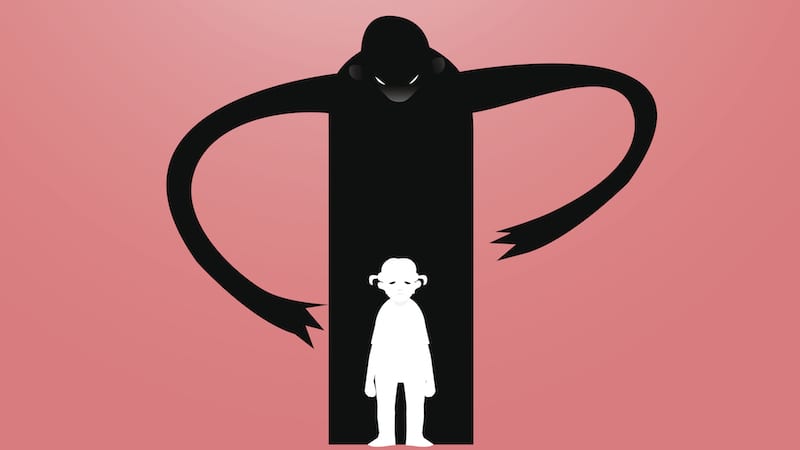
I’m that kid. The kid who gets under your skin. The first grader who colors on your walls and spits on my table partners. The high school junior who mouths off and smirks from the back row. The child who knows exactly how to push your buttons, and does. Regularly.
I taunt. I terrorize. Sometimes I hit. I destroy. I curse. Rolling my eyes often seems like my favorite thing to do. I talk back. Maybe I’ve even made you cry a few times.

Don’t take my behavior toward you personally.

I know that doesn’t make any sense, since it’s mostly directed at you. But you know that old saying about having a bad day at work and going home and kicking the dog? Well, you’re the dog.
(I didn’t mean that the way it sounded.)
I really am a good kid deep down. There are so many things I care about. I have skills and strengths that I want to use to help other people. In fact, I secretly want for you to know all these good things about me.

But unfortunately, you don’t get to see these good things.

I am afraid. I am in pain. You know how if you put oil and water in a container together, the oil will float to the top? It’s like my fear and pain are the oil, and all the good things about me are water. Every once in a while, you might shake me up and see just a glimpse of those good things on the surface, but no matter how hard I try, the fear and pain will bubble up and cover everything again. It’s easy to think that the way that I react to fear and pain—the anger, the defiance—is the real me. In fact, I’ve even started to believe it.
The fear and pain I feel is different than what you may think. It’s not always actual physical fear or pain (though sometimes it is). I might be afraid that I’m not worthy of love, since my dad left me and my mom after I was born. I might be afraid that I will grow up to be like my mom, who is an alcoholic and misses all my baseball games. Or I might be in pain because my family and culture say I’m not manly enough since I cry a lot and am not really into sports. I might be in pain because someone who is supposed to love and protect me said something deeply hurtful that I won’t ever forget.
Maybe you look at me and think there’s no excuse for the way I behave. You might think, “This child has a stable family, loving parents, and a secure environment. I know kids with a lot less who behave perfectly fine.”

But please remember that there is always more than what you see.

What you might not know is that the pressure to be perfect or different than who I am is so intense and crushing that I believe I’m a failure, and I’m too scared to tell anybody that.
Or maybe my home life is fine, but I’m learning a very dangerous message—that I’m inadequate, unlovable, or not worthy of belonging—in some situation outside of home, or inside my own head. Maybe something is going on, or has happened, that nobody, not even my parents, knows about but me, and I do a really good job of faking that I’m happy or that I don’t care.
I know that I’m making things hard for you. I know you don’t deserve it. But I feel like you should know this: Somewhere, on a level I’m not even aware of, I’ve chosen you to behave this way toward because I know you’re a person who can help me.

This is a cry for help.

I want the same things everybody else does, but I’m asking for it in the most confusing and unflattering of ways.
I don’t know how to fix all of this (or I would have already). And I don’t think it’s necessarily your responsibility to fix me. But here’s how you can help me.
Start small. I’m fragile, and I’ve been hurt. Because I’ve got so much junk at the surface, maybe don’t try to remove it all at once or ask me to open up right away about my fear and pain.

Show me that you notice me—not my behavior, but something about me.

Ask me questions.
Don’t give in when I try to rile you up.
Maybe, slowly, I will learn to trust you. Or maybe I will take a long time, and you won’t see any progress in our time together, but your patience and kindness toward me will plant a seed that will sprout many years later.
But please, please, please don’t give up on me.
Love,
That Kid

Sunday, April 21, 2019

Monday Motivator #32 2018-19


Slow Down


It’s easy for me to get caught up in a rush, both personally and professionally. There’s always something to check off my to-do list: another standard to cover, another appointment to keep, another event or meeting to attend. Lately, I’ve been trying to slow down. Although I can’t completely rid myself of my duties and obligations, I’ve realized that I can enjoy and get more out of them when I allow myself to be present in the moment, stop myself from thinking about what’s next, and give my time and attention to the matter at hand.
It has occurred to me that my students have a similar problem. Many times I see them rushing through their work, trying to get it done so they can move on to the next thing. My class is just one of six or seven courses my high school students are taking, so I understand that they may not always have as much time and motivation to slow down and think through their work as I might like. Instead, I’ve started looking for opportunities to slow down within the classroom, ways to help my students see the value of putting extra thought and time into their work.

Quotation Pass-Around

I began using this activity when I found myself repeatedly asking students to “go deeper” with their thinking and analysis of a text. While we are in the midst of reading a novel, I ask students to choose three quotations from their nightly reading. I don’t give much more direction other than to choose things that they think are important, interesting, and/or confusing. When students return to class with their quotations, they choose their favorite one (each student says theirs out loud to avoid repeats) and write it at the top of a piece of paper. We move our desks into a large circle and pass the papers to the right. Students spend one to two minutes responding to the quotation in front of them. Before their first response, I give them some ideas for what they can write about:
Why do you think this quotation is important?
What does it tell us about a character or event?
Is there a deeper meaning below the surface?
Does it foreshadow a future event?
Is it ironic in any way?
Does it remind you of something else?
Does it raise any questions?
The one rule of the activity is that each response needs to bring up something new, rather than just restating the same idea over and over again in different words. As the papers continue to move around the circle and all of the obvious ideas are expressed, the process gets more difficult. Students have to think a lot harder about the quotation and begin to look at it from different angles.
This activity typically takes up an entire class period, and sometimes the quotations don’t even make it all the way back to their original owners. Afterward, we look back over the chain of responses and I ask students to identify the most insightful ones. They are almost always the responses at the end of the chain. The lesson that is illustrated for students is that the best ideas aren’t always the ones that pop into your head first.

Reading Breaks

Many times when my students are presented with a more challenging text, they complain that even after reading it, they just don’t get it. While working through a unit on Edgar Allan Poe’s short stories, I was hearing this complaint a lot. Poe’s work is full of dense, complicated sentence structures and obscure vocabulary. When asked about the reading strategies they were using to improve their comprehension, most students admitted that they just kept plowing through the text, skipping over things that didn’t make sense. My students needed to learn how to slow down as they read, how to pause and check their understanding before continuing. If they weren’t going to stop on their own, I decided, I would have to build reading breaks into the story. I reformatted the next story we read by breaking it into one- or two-paragraph sections. I started by reading the first paragraph aloud and thinking aloud to show that even I, as the teacher, need to pause and reflect on what I have just read.
I also demonstrated how to annotate the text as you read. I explained to students that sometimes their annotations might   simply summarize a particularly difficult section, but that other times their annotations could reflect what they were inferring about character, setting, or plot. Students continued reading the story in this vein, stopping at each break to assess their understanding, annotate the text, and talk briefly with their group members. Although it took us a lot longer to read the story this way, the majority of students reported understanding it much better. Pausing to reflect while reading is a simple strategy that any student can do; it’s just that many of them are in too much of a hurry to do it. After building the breaks into the reading, students came to see that slowing down was a strategy they could turn to when reading became difficult.

One Beginning, Three Ways

In their rush to start on a piece of writing, students can tend to make the first sentence a throwaway, a means of getting started and on to the better stuff. But a good, effective lead is crucial to a piece of writing, and I want my students to see that you’re never going to open a book that has as its first line, “Today I’m going to be writing about . . .” We started by turning to our independent reading books and checking out the leads crafted by professional authors.
After we had many examples to look at, we began to put names to the strategies that the authors were using and grouping the leads into categories, such as dialogue, flashback, focus of sensory detail, mysterious, and more. When we went to write our next essay, I required students to write three different leads to the piece, employing a different strategy for each.
After students had crafted their leads, they shared them with their group members, who gave their opinions about which lead was most intriguing and would make them want to read on. Most often, students ended up choosing the second or third lead that they had created for the piece, once again demonstrating that the first thing that comes to mind isn’t always the most creative or original. Instead of dashing off the first sentence that comes to mind, students were creating leads that were more interesting and enticing for the reader.
Each of these strategies is grounded in the simple principle that taking the time to slow down, reflect, and put more thought into reading and writing produces a richer result.

Sunday, April 14, 2019

Monday Motivator #31 2018-19

The Best Classical Music For The Classroom

Smart Classroom Management: The Best Classical Music For The ClassroomClassical music has many wonderful benefits for the classroom.
Studies have shown that it can . . .
  • reduce stress and anxiety
  • improve memory
  • increase productivity
  • enhance concentration
  • raise well-being
  • spark creativity
I like to put the music on as students are entering the classroom and carrying out their first routine of the day. It helps set the tone and puts them in the proper mindset for learning.
It also has a strong calming effect and helps keep excitability at bay.
Over the years I’ve developed my favorite compositions that include both the classical period (1720-1830) as well as more contemporary classical music.
They’ve brought so much joy and peace to me and my students that I thought I’d share them with you—in no particular order.
Enjoy!
Good For You, Too
Some of the above selections are more jaunty than others and thus lend themselves to heightening mood and positive energy, while others are best for their calming effect.
All, however, are astonishingly beautiful.
They work well for routines, transitions, and occasionally even during independent work. I recommend downloading the pieces you like best from iTunes or Amazon so you’re not interrupted by annoying ads.
You’ll find classical music good for you, too. Listen on your way to school or put it on in the background while working in your classroom.
The research on classical music and stress is especially compelling, but I just like the way it makes me feel and how it gets me into a faster and deeper state of flow.
If you’re a Pandora subscriber and just want to put the music on and forget about it, my favorite stations are Classical for Studying, Yo-Yo Ma, and This Will Destroy You.
If you get a chance, please leave a comment below and include your own favorite classical pieces and/or Pandora stations. I know I would appreciate it, and I think others would too.
Thanks for reading.
-Michael

Monday Motivator #34 2025-26

  How Teachers Can Benefit From End-of-Year Reflections A teacher mentor shows why reflecting at the end of the year is so important for gro...