Keep persevering even when it's hard and ask for help when you've tried all you can. And sorry in advance if this song is in your head all day, but I just love this video.
https://www.facebook.com/uniladmag/videos/little-girl-asks-alexa-to-play-baby-shark/1967799366612091/
Sunday, January 27, 2019
Monday, January 21, 2019
Monday Motivator #20 2018-19
Purposeful Partners
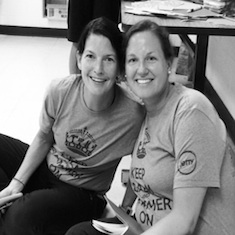
Tara Barneet & Kate Mills
What teacher hasn’t experienced the subtle (and sometimes not-so-subtle) position shifting that happens when students are asked to turn and talk? If kids haven’t already chosen a spot on the carpet next to a favorite friend, they’ll shift and shimmy so that when they turn to a partner, it’s one of their choosing. And if you think you’ve solved that problem by establishing guidelines for everyone to turn to the person next to him, what do you do about the looks of disappointment and barely audible sighs when they realize that the partner next door may not be their top choice?
We don’t want anyone to be on the receiving end of that feeling of rejection if we can help it. Of course, we teach kids in our class to respect one another and use read-alouds to build empathy, but we have a better way of avoiding the hurt feelings that can happen during turn-and-talks: long-term partnerships.
Long-term partnerships are valuable for reasons beyond avoiding hurt feelings. They ensure that turn-and-talks or any time spent collaborating can happen quickly and efficiently. They also ensure that students get to know each other well: well enough to engage in meaningful conversation and reflection that helps each member of the partnership grow.
As co-teachers, we can clearly see the power of this type of partnership. Having a professional relationship as partners is one of the most rewarding parts of our job. Who wouldn’t benefit from having another person they know and trust to bounce ideas off of, give feedback to, and get feedback from? Because we see the benefits, we make sure to set up structures in our classroom so our students can see the power of partnerships as well.
That’s why, in our class, students have long-term partnerships in several areas throughout the day, including reading workshop, writing workshop, and read-aloud. To help these partnerships be set up for success, we put several procedures into place to form and maintain the partnerships.
Purposeful Pairing
As much as we like to avoid the hurt feelings that can happen when one partner makes it clear that he is not paired with a student of choice during random turn-and-talks, we also want to avoid surprises when we place students in long-term partnerships. To this end, we make sure students are involved in the process.
During the first month of school, we make sure that students experience different partners. We have them partner up with the person adjacent (which is also embedded math vocabulary instruction), opposite, and diagonal from them at their tables. We have them sit next to this partner at the carpet during minilessons. Then we’ll move on to partners who are at different tables, and throughout this “trial” period, we are sure to have some same- and opposite-sex partnerships. Throughout the first month of school, students have the opportunity to work with many different peers and get a feel for what partnerships feel most and least supportive to them.
At the end of the month we introduce partner want ads. We were inspired by Shana Frazin, and want ads always give our students a sense of empowerment that they have a voice in the decisions that affect them.
Want ads are exactly what they sound like: similar to the want ads for jobs that we see in the paper, they list the qualities they are seeking to fill the position of partner. We show an example to students of a want ad that lists the behaviors that we noticed over the past month that work best for us and would help us grow as writers. Then students get to work creating their own personal want ads for partners. Once they’ve created their own want ad for a partner, the ads are assigned a letter and posted on a reserved space on our closet door.
The next day we give students some time to read the posted want ads and write down several letters of ads for which they think they may be a match. Students write down several letters, and our work is to blend their choices with the data that we’ve been collecting all along based on what we’ve observed during the previous month.
Here are some guidelines for want ads:
They are anonymous. Yes, we’re fully aware that students may have some idea about who want ads belong to based on clues like handwriting, but we find this step important so that the focus is more on the qualities of a partner and deciding if you hold those qualities. Each want ad is assigned a letter rather than a name. We make certain that every student writes several letter choices so we’re sure to be able to match students with one of their choices.
When Problems Arise in Partnerships
Problems arise in most relationships in life at some point, and we think it’s important to try to solve them. That’s why our first reaction to conflict isn’t to change partnerships. First of all, we’ve spent a lot of time forming these partnerships, so there must be a reason that these students are together. Secondly, changing one partnership has to disrupt at least one more partnership, which may not be facing any challenging issues. Finally, solving relationship problems is a life skill.
Rather than making changes when there are signs of conflict, we support partnerships in finding solutions to their problems by creating opportunities for open conversation about them and brainstorming ways the partnership can address the problems in a proactive manner, checking in frequently and celebrating with the partnership when they work through their trouble.
One partnership that comes to mind is Brian and Katie. When we observed them, their frustration with each other was visible by their body language: rolling eyes, arms crossed, turning away from each other. We decided to check in individually first to see if there was an issue, and sure enough there was. Katie felt that Brian was being “bossy,” and she was able to explain it by naming the language he used. Instead of making suggestions that Katie could try, Brian’s suggestions sounded more like, “You should . . .” During the time the following day when students were giving one another feedback on their writing homework, we pulled up alongside Katie and Brian to check in, supporting Katie in telling Brian about the problem she was having. Since we are sure to focus very explicitly on the language we as teachers use, as well as the language that our students use with each other, Brian was able to recognize that the language he chooses matters, and we were able to support him in naming what he could do differently going forward.
During turn-and-talks in the following weeks, we made sure to listen in to their conversation to help hold them accountable to the plan that Brian had made with Katie. We noticed when Brian made that subtle shift in his language from telling Katie what she should do to suggesting what she might try, naming what he had done and why it was so important.
Once partners work through conflict, we think it’s important to help them name the steps that they took so that it’s transferable to future conflicts. In the case of Katie and Brian, it might sound like, “Do you see how when you had a problem, you were able to tell each other what it was? And then, because you’re the kind of people who care about what the other person has to say and how each other feels, you made a plan to fix the problem. You kept working at it until it felt like your problem was solved. Any time you have a problem with each other, you could try this.”
We find that when we take the time to help students form partnerships and work through conflicts that arise in the partnerships, they can be a rewarding experience for everyone involved.
AUTHORTara Barnett and Kate Mills
Tara Barnett and Kate Mills are teachers in New Jersey. Their favorite years in the classroom have been the ones they co-taught together, when they experienced the powerful effects of professional collaboration for both the teachers and the students in the classroom. They blog together at Tara and Kate.
Saturday, January 5, 2019
Monday Motivator #19 2018-19
Reading, Engagement, and Kidwatching
I looked up from my reading conference with Jordan to see that David was building a mighty impressive book fort, Mateo and Tucker were exchanging Lego figures behind books, Jasmine had just returned from her third mid-workshop trip to the bathroom, and Sophia and Lucia were lying across Hokke stools spinning in circles and giggling with books in hand. It was not the image of reading engagement I had imagined we would be capable of at this point in our year together.
For a moment I felt stuck. How can I respond to this need? How many ways can I teach and reteach what reading workshop looks like, sounds like, and feels like? For my kinesthetic K-1 readers, it was time to find another path to deeper reading engagement. Thankfully I stumbled upon the engagement inventory checklist in Jennifer Serravallo’s The Literacy Teacher’s Playbook K-2.
“Readers, today instead of meeting and talking with you, I am going to stand back and watch. I am going to notice all of the things you are doing to read deeply in your books. I am going to keep track of what I see on this checklist so we can meet and talk about the patterns we notice.” I had to resist the urge to sit and confer with readers and dutifully observe what I saw, scanning the room and recording and coding my students’ actions every five minutes. I developed a quick coding system: B—in bathroom, SB—switched books, LA—looking around, BF—building a book fort, FP—flipping pages, RR—rolling on rug, TF—talking to a friend, ER—engaged reading, and RW—responding and writing a sticky note. In 30 minutes I had recorded each child six to seven times on my chart. With this evidence I could quickly see patterns of behavior for each child and general trends in the classroom.
As I expected, the distractions were infectious: if someone left for the bathroom, others followed; if someone started playing, others joined; if someone moved spots, more readers moved. I noticed that after 20 minutes many of my more emergent readers were flipping pages or seeking out others to whisper to. I also noticed that many readers remained engaged throughout the workshop, and if for a moment they were off task, they frequently reengaged independently. This was a strength I could use! I could also identify students who would benefit from additional engagement strategies.
One-on-One with Insights
The engagement inventory was a fantastic tool to support reading conferences. I explained to David, “I want you to listen to what I saw you doing during our workshop. Then you can tell me if you notice a pattern: looking around, talking to a friend, drinking water, building a book fort, engaged reading, engaged reading.”
David smiled and said, “I was playing a lot, but when I started reading, I kept reading.” We were able to talk about what helped him start reading (“Once I set up all my books, it was a force-field and nobody could talk to me”) and decided that he could choose a more isolated reading spot curled up in a cubby so that none of his precious reading time would be spent building book force-fields!
The inventory data gave me a tool to shift from telling students what I wanted to see in our workshop to talking with children about how their engagement was fluctuating during our workshop. “I see that the first four times I looked, you were deep in your reading, but the last two times you were rolling on the rug. Can you remember what changed for you?”
Mateo and Tucker discovered that they wanted to sit apart from each other because their powerful friendship made them forget to keep reading. Jasmine acknowledged that she didn’t really need to go to the bathroom; she just needed to stretch. She set a goal to read three books, stand up or stretch in her spot, and then read on. Sophia swapped out the books she was bored with for more engaging books, and sat on an air pillow to wiggle as she read.
Students were able to reflect on their reading habits and began to notice the habits or distractions that would pull them out of productive work and which habits and strategies were supporting them. They began to make more strategic choices to support deeper reading engagement. I repeated the inventory once a week or on alternating weeks, and was able to use information across time to discuss patterns of engagement without judgment. It gave us a good start, but it didn’t tell the whole story.
Lucia was slowly increasing her stamina, but engagement was a significant challenge for her in all areas across the day. She struggled to take responsibility for her actions and often felt defiant and angry. When I met with Lucia and showed her the checklist, she told me my records were wrong. “You are just looking at me at the wrong minutes! All the other minutes I am reading!” How would I tackle this one?
The following day Lucia was draped across a stool, book on the floor—spinning. I picked up an iPad and began video recording. I started with her spins and then circled the room. I could feel readers suddenly shift and reengage when they noticed I was recording. It was more powerful than my clipboard and didn’t require the coding system. Readers wanted to be noticed reading and thinking! As I came back around to Lucia, still spinning, I paused the camera and sat down.
“There’s something I want to show you. I think I captured more of the minutes this time.” We watched the video together and she didn’t speak. I leaned in. “Who did you notice really thinking deeply in their reading bubble?”
She smiled. “Jordan—he was so deep in the book world, he didn’t even look up once.”
“Anyone else?”
“Yeah, Marianna. She was in her own spot and she was thinking and reading and smiling.”
“What did you notice about your own reading?”
“I was in one spot and my eyes were in the book, and I was spinning a lot and reading a little.”
“Is it easy for you to spin and read at the same time?”
“Yes, except I read a little and then spin, and then read and then spin.”
“Oh, so it goes, read-spin-read-spin-read-spin. That sounds like an important pattern you noticed: sometimes you are reading and sometimes you are spinning. Hmm, so what would you want to change to make your reading practice more powerful?”
“Well, I think the pattern needs to go read-read-read-read-read. So maybe I need to pick a better spot. It’s hard to read-read-read-read when I’m spinning.”
“Yes, I imagine that would be very hard. Tell me more about what makes a good spot for you . . .”
With a video engagement inventory I could quickly scan the room between conferences and then show a segment to a specific child or small group. I kept my recording to 30 seconds or less and focused on capturing the most engaged readers. The video inventory contained more information than I could record in notes. I could scan and see which books kids were reading, I could see how they were organizing what to read next, I could track where they were reading in the room, and I could see students working to implement a strategy we talked about over time.
I began projecting clips for the whole group during our reflection circle and asked students to think and comment on where they observed readers working for greater engagement. Suddenly students were sharing their own reading victories and noticing the victories in others. Students were trying strategies I offered and integrating strategies they observed in peers. We were no longer stuck thinking and talking about what we wanted workshop to look, sound, and feel like; we were using video evidence to describe, evaluate, and celebrate the reading engagement in our community.
It isn’t a magical fix. We still have days when distraction and disruption overcome us. The difference now is that we have clear visual models and expectations, a bundle of engagement strategies to turn to, and a shared investment in sustaining deep engagement. If we start to slip, I can pick up my iPad and before I tap open the camera, readers shift and sink into their stories—no checklist needed—so I can keep reading with the child next to me.
Saturday, December 15, 2018
Monday Motivator #18 2018-19
Creating a Habit of Noticing
They say it takes at least 21 days to develop a new habit. When I was teaching Special Education, one of my colleagues taught me a technique that helped me focus on specific skill development within myself or my students. I have since adapted that technique to help teachers develop the “habit” of noticing.
First of all, what is noticing? The skill of noticing is foundational to successful implementation of Conscious Discipline. It helps us be present and build relationships as we encourage helpfulness in our students and create a School Family™. Your job description as the Safekeeper promises children that you will keep them safe, and they have a responsibility to help keep it safe. We must notice their helpfulness in order to encourage them be successful at this job. (pg. 176 Building Resilient Classrooms)
There are four steps that will help you successfully notice the helpfulness of children without judgement. Start by using the child’s name or the pronoun “you”. Next, describe in detail what the child did that was helpful. Help the child understand how that behavior helped someone else or the entire class. Finally, end the description with a tag such as “that was helpful” or “that was thoughtful”.
Here is an example of the noticing language: “You scooted over, so Jon would have more space in the circle. That was helpful!”
Just as you would have to be very intentional at learning a new language such as German or Spanish, you have to put some tools in place to help you be successful in learning the language of noticing so you may teach and model that skill for children. You may find it very helpful to write the following on a dry erase board so it is visible throughout the classroom as you learn this new skill.
“You _______________, so _______________. That was helpful!”
Dr. Bailey suggests that in the first six weeks of school you are intentional about noticing children privately and publicly at least 10 times per day. Not 10 times per child, but in general, you notice at least 10 helpful acts per day.
That takes me back to the technique I mentioned from my experience in Special Education. Grab 10 pennies or other small objects and put them in your right pants pocket before the children arrive. Intentionally commit to noticing 10 helpful acts that day. Each time you notice a helpful act, move one penny to your left pocket. Your goal would be to have all 10 pennies in the left pocket by the end of the day! If you don’t make it, this is good information for you and perhaps you could allow yourself to “Oops” and try again tomorrow! If you do then CELEBRATE! You did it! You gave yourself a concrete strategy for successfully modeling the skill of noticing to your School Family™. Before you know it, you’ll have a new habit—Noticing!
Monday Motivator #17 2018-19
While modeling a coaching pre-conference in a workshop for instructional coaches, one teacher shared that as a first-grade teacher she was struggling with students at reading stations. She said that students often were off task or complaining to her about what another student was doing.
Our conversation went something like this:
Steve: Pick two of the centers you’d most want to focus on.
Teacher: Word work and journal writing.
Steve: Would you describe for me the gap that exists between what you want to see and hear happening at those centers and what you are seeing and hearing?
Teacher: I want to see and hear students practicing the skills in the center work. Now, too often, little is being accomplished and frequently students are interrupting my work with the guided group.
Steve: Are students going to centers individually or in some grouping?
Teacher: I pair them up, sometimes in groups of three. I try to place a stronger reader in each group so that he can provide assistance to a student who is struggling.
Steve: If we created a continuum of Low to High center engagement, could you describe student behavior at each spot and place students by name as to where you think they usually are on the continuum?
Teacher: Yes, I can do that.

Steve: What if during the next week, I observe at the two centers and record the behaviors that are present along with student names? If you’ve created the continuum, we can begin with comparing what I observed with what you predicated and plan for changes from there. Perhaps I can capture some of the students on video.
Teacher: Sounds great.
In this model I illustrated the coach avoiding offering solutions at the teacher’s first mention of a problem. Two thoughts were in my mind:
- Observing first to get a clearer picture of “what is happening” before focusing on change.
- Involving the teacher in a problem-solving process
My guess was that we would discover different strategies would be needed to move particular students higher on the continuum. We could set goals around next engagement levels and identify progress (or lack of it) as we experimented.
Reading Switch: How to Change Things When Change is Hard, by Chip and Dan Heath, I was introduced to solution focused therapy. I saw a connection with what I have developed over time in my coaching work. The solution-focused therapist isn’t concerned with digging into the past for why things are the way they are. Instead they look for a solution to the problem at hand. A common question the therapist asks is, “If a miracle happened, and the problem was gone, what are the first small things you would see that would make you think the change had happened?”
The therapist questions to get the picture of the change in concrete, very specific terms.
“Solution focused therapists learn to focus their patients on the first hints of the miracle ‘What’s the first small sign you’d see that would make you think the problem was gone’- because they want to avoid answers that are overly grand and unattainable.” (pages 37-38)
When the picture is clear, the therapist follows with the question, “When was the last time you saw a little bit of the miracle, even just for a short time?” This question demonstrates to the client that she can solve the problem and in at least a small way has in some circumstances.
Solution Focused Core Beliefs:
- We don’t need to fully understand the problem before we can find a solution.
- Everyone has the strengths and resources to help themselves.
- There will already be something that is working.
- Change can happen in very small steps.
- No matter how bad the problem is, it doesn’t happen all the time.
- We can’t change the past so we should focus on the future.
- Having a clear idea where you want to be makes it more likely that you’ll get there.
The approach I took with the first-grade teacher resembled what I read about solution focused approaches. The continuum would provide a description of the behaviors that would indicate the teacher was making progress toward her desired results. When I collected the observations of student behaviors, we would likely identify that the centers were generating the desired behaviors with some students. That would set the stage to generate strategies to move more students further along the continuum. That progress would encourage the teacher, support the coaching relationship, and build teacher and student efficacy.
Sunday, December 9, 2018
Monday Motivator #16 2018-19
SPREAD: Teaching and a Balanced Life
Franklin planners. To do lists. Electronic calendars. Books describing how to delegate . . . or prioritize . . . or simplify abound. I have tried most of them, inching my way toward balance and peace. Like most women, my responsibilities are numerous and time inevitably seems too limited. As my workload increased and my mother declined with age, it became even more essential that I find a way to create balance in my life. I was spread too thin. I knew the things that helped, but I needed a way to remember them so I could do them regularly. After lots of experimenting and meditation, I came up with an acronym that keeps my priorities memorable and workable on a daily basis. Let me be clear: it doesn’t make the difficulties -- or even the “too much” -- disappear; but it helps me to remember and to live my own priorities. I’m spread too thin. I live by SPREAD.
S = Spiritual
Spending time focused on the spiritual life is essential to my well-being. People have different customs, traditions, and beliefs, and there are so many ways to get in touch with the spiritual: quiet solitude or music; reading or writing; nature’s beauty or prayer; some combination of those or something different. How to get in touch with the spiritual isn’t the point. Regardless of our differences, we are spiritual beings. Far from being a waste of time, spending time with the spiritual assures that I do what is the best possible use of my time. I know already that I can’t do all that I want, but I certainly want what I can do to be valuable. The spiritual is what gives meaning and purpose to my life.
P = Physical
Exercise is a great stress reliever, and I feel better when I exercise, but it’s easy for me to get so busy with my workload that I don’t make time for this essential care of my body. Finding an exercise or a variety of exercise that is enjoyable is vital. Also in this physical category are those essential pieces of being human that are surprisingly easy to forego, but if neglected take their toll over time: getting enough sleep and eating healthy food.
R = Relationships
We humans are social creatures. If we want our relationships with others to be healthy and happy, we need to take care of those relationships. We need to spend regular time with family and friends. No matter how busy I am, making sure I get this time to connect with those I care about is essential.
E = Enjoy
The world is full of beauty. The food is delicious. The books are interesting. The children are cute or funny or surprisingly insightful. People are kind. Things to enjoy abound: colors, scents, music, shapes and textures . . . It might take some mindfulness, and awareness to slip into the place of enjoyment. Or it might take a few minutes: giving oneself permission to enjoy a good book; treating oneself to a cup of coffee; making time to smell the roses. Really, to smell the roses and to feel the softness of their petals on your lips and cheek. The world is full of beauty.
A = Act
This all started with too much to do. And those things are still there: work tasks and household tasks. Monthly reports and assessments. Laundry and dishes. The lawn to mow and weeds to pull. A roof that needs repair and the car’s oil to change. Bills to be paid . . . again. And then there’s that closet to clean out. It won’t all get done today, but some will get done. It feels good to get something done. And now, with my spirit, my body, my relationships, and my outlook attended to, the work is put in its right place. The work appears now for what it is: a gift.
D = Dream
We all have aspirations for things we want or things we want to do: a dream trip or a talent to develop, something to accomplish, or even a possession. Some call it their “bucket list.” Dreams are the things that keep us looking to the future and hopeful. Putting "dream" in my acronym assures that I spend a little bit of time on it daily -- even if that time is only remembering that I have that dream. My dreams are part of who I am.
I’m spread too thin. And maybe (probably) you are too. SPREAD helps me accept that fact, and remember what’s really important to me. It helps keep me in balance, working but not all about work.
|
Kelly Petrin
Kelly Petrin is a preschool teacher in Portland, Oregon. She also teaches as an adjunct instructor at Lewis and Clark College.
Sunday, December 2, 2018
Monday Motivator #15 2018-19
From Balance to Beats
https://www.choiceliteracy.com/articles-detail-view.php?id=3061
When I was a teenager, I played clarinet and met weekly with a private instructor. But after the school year was over, we stopped poring over sheet music and practicing scales and long tones. Summers were given over to jazz. Within certain rhythms or a range of sounds, almost anything was possible. It took a lot of effort and it was sometimes frustrating to improvise after nine months of exacting attention to getting what was on the page exactly right. But I learned that it was also fun to try to invent new melodies within the constraints of keys and timing.
I spent too much of my life thinking about how to live a “balanced” life, charting out schedules and trying to slot in time for myself. I’ve finally learned a good life isn’t about balance, but beats. The beats that matter most -- family, writing, work, volunteering -- recur on a daily, weekly, and monthly basis. Certain beats are much more prominent in some days and weeks than others. But it’s all about improvisation -- finding a rhythm and melody that works for a while, and then disappears when a new rhythm emerges.
What are the beats in your life? What’s most prominent now? Sometimes life is all about strong, overwhelming beats of family (with a new baby) or writing (with a new book) or career (with a switch to a new school). Your life might not feel in any way balanced, but the melody can still be sweet.
Brenda Power
Founder, Choice Literacy
https://www.choiceliteracy.com/articles-detail-view.php?id=3061
Work-life balance sets an unrealistic expectation of keeping different roles in steady equilibrium. Instead, strive for work-life rhythm. Each week has a repeating pattern of beats—job, family, friends, health, hobbies—that vary in accent and duration.
Adam Grant
I spent too much of my life thinking about how to live a “balanced” life, charting out schedules and trying to slot in time for myself. I’ve finally learned a good life isn’t about balance, but beats. The beats that matter most -- family, writing, work, volunteering -- recur on a daily, weekly, and monthly basis. Certain beats are much more prominent in some days and weeks than others. But it’s all about improvisation -- finding a rhythm and melody that works for a while, and then disappears when a new rhythm emerges.
What are the beats in your life? What’s most prominent now? Sometimes life is all about strong, overwhelming beats of family (with a new baby) or writing (with a new book) or career (with a switch to a new school). Your life might not feel in any way balanced, but the melody can still be sweet.
Brenda Power
Founder, Choice Literacy
Subscribe to:
Posts (Atom)
Monday Motivator #34 2025-26
How Teachers Can Benefit From End-of-Year Reflections A teacher mentor shows why reflecting at the end of the year is so important for gro...
-
10 Ways to Sabotage Your Classroom Management by MiddleWeb · Updated 08/03/2024 https://www.middleweb.com/19037/10-ways-sabotage-clas...
-
Charts at Tools, Charts as Teachers We’ve all been in (or, at times, have been) the classroom that has chart paper as wallpaper. Every ope...
-
10 Ways to Sabotage Your Classroom Management BY MIDDLEWEB · PUBLISHED 11/23/2014 · UPDATED 11/22/2019 By Jennifer Gonzalez You know...