Sunday, February 11, 2024

Monday Motivator #23 2023-24


Random Acts of Kindness Week 2024
#RAKWeek is February 11-17, 2024!

Random Acts of Kindness Week is the perfect time to #MakeKindnessTheNorm by sharing your stories of kindness along with making a big impact through small acts. See what a difference a small act can make - Meet Norm

Tag your stories on social media with #RAKWeek and visit randomactsofkindness.org for FREE inspiration, ideas, and resources. 

Make Kindness the Norm ♥️ 

Day 1: Sunday - Kindness Starts with You

  • Story: Reflect on a time when an act of kindness made a difference in your life.

  • Challenge: Perform a random act of kindness for yourself, such as practicing self-care or expressing gratitude for your own accomplishments.

Day 2: Monday - Spreading Joy in the Community

  • Story: Share stories of kindness you've witnessed or experienced within your community.

  • Challenge: Challenge yourself to perform a random act of kindness within your community, such as helping a neighbor in need, picking up litter in a public space, or thanking essential workers in your area.

Day 3: Tuesday - Kindness in the Workplace

  • Story: Share a story about someone who demonstrates kindness and compassion in the workplace.

  • Challenge: Show your appreciation to your coworkers or employees by writing thank-you notes or buying their favorite treat or beverage.

Day 4: Wednesday - Valentine’s Day ♥️

  • Story: Share heartwarming stories of love and kindness and the impact it has had on you.

  • Challenge: Download The Kind Heart Project and perform an act of kindness for a stranger, someone you know or even yourself.

Day 5: Thursday - Kindness in School

  • Story: Think of someone who impacted you when you were at school. It could be a teacher, a coach, a friend, your parents. 

  • Challenge: Reach out to the person you’re thinking about and share your story with them. We’d love to hear it too!

Day 6: Friday - Cultivating Kindness in Relationships

  • Story: Reflect on the relationships in your life and how kindness strengthens them.

  • Challenge: Reach out to a friend or family member you haven't spoken to in a while and express your appreciation for them. Consider sending a handwritten note.

Day 7: Saturday - Random Acts of Kindness Day #RAKDay

  • Story: Reflect on the week's activities and the impact of spreading kindness.

  • Challenge: Continue incorporating acts of kindness into your daily life beyond this week. Join our global community of RAKtivists and help Make Kindness the Norm♥️

We can create change that extends beyond Random Acts of Kindness Week. Let's continue to inspire and uplift one another, one story and one act of kindness at a time. 

Together, let’s make kindness the norm! 

#RAKWeek #RAKDay #MakeKindnesstheNorm #RAKtivists

https://www.randomactsofkindness.org/the-kindness-blog/26-random-acts-of-kindness-week-2024

Sunday, February 4, 2024

Monday Motivator #22 2023-24

How Kansas City Chiefs coach Andy Reid unlocked Travis Kelce

ANDY REID STILL recalls the first time he met Travis Kelce, after one of Kelce's games while he was still at the University of Cincinnati. He remembers thinking it was going to take patience -- lots of patience -- if he were to ever coach this player.
Kelce treated Reid like a long-lost friend more than a new acquaintance. He called the veteran coach "big fella."
"He was being Travis, being cocky," Reid said. "Jiminy, he was cocky."
It was a fitting start to the relationship between Reid, an old-school coach, and Kelce, a fun-loving tight end who proved Reid right in that he would test his patience plenty.
Even recently, in Reid and Kelce's 11th season together with the Kansas City Chiefs, the two clashed on the sideline after Kelce slammed his helmet in frustration during an ugly Christmas Day loss to the Las Vegas Raiders at home. Reid instructed an equipment manager to not immediately return the helmet to Kelce and had some words for him before eventually sending him back into the game.
But things generally have worked out as well as Reid and Kelce could have hoped. Under Reid's tutelage, Kelce has become one of the greatest tight ends of all time. He is fourth all-time among players at his position in catches and receptions. He is no longer the undisciplined and cocky kid Reid met that day in Cincinnati, and yet, in many ways he hasn't changed at all.
"For Travis, Coach Reid has almost been like that uncle you have that you listen to and get advice from," quarterback Patrick Mahomes said. "He makes Travis a great football player but I think even a better person. He has a good feel for getting on Travis when he needs that motivation, but at the same time he lets Travis be who he is."
TIGHT ENDS COACH Tom Melvin could often be found in the players' parking lot before team meetings early in Kelce's career. Properly managing his time was an issue for Kelce then, and Reid would send Melvin outside to wait for Kelce and rush him into the building.
Reid isn't much for yelling and screaming, preferring more subtle ways to get his point across. One is the look he uses when he knits his eyebrows and glares at a player.
Kelce said the look means "enough screwing around," adding he used to receive it frequently.
"One of the hardest things for me was to juggle enjoying my life off the field and still being a professional and ready and at the top of my game week in and week out," Kelce said. "A lot of that was Coach Reid sitting me down, talking with me and guiding me through all of it. I was testing it with him.
"I was late to meetings, hanging out too much throughout the week, not necessarily focusing and showing to my coaches that I was giving everything I could. I learned you can show your personality and have fun but you have to be accountable to the guy next to you and be able to handle the highs and the lows of the game. Now, football is the only place in my life where I'm really detailed, really professional. When I'm thinking about football, I'm dialed in. I can lock in, really compartmentalize. That's because of Coach Reid."
Kelce is a lot of things, including being the greatest pass-catching tight end of his generation. His streak of seven 1,000-yard seasons, a record for his position, was snapped in 2023 -- he was 16 yards short -- when the Chiefs rested him, Mahomes and some of their other stars in the season's final game.
Kelce's also a big personality who once had his own dating reality show and now is dating the world's preeminent pop star, Taylor Swift. Travis and his brother Jason, of the Philadelphia Eagles, host a podcast in which Travis isn't afraid to speak his mind, often profanely. Travis once -- while seated next to Mahomes at a nationally televised basketball game -- was shown chugging beer.
Reid might prefer that Kelce live a more sedate lifestyle, but he knew what to expect from Kelce when he joined the Chiefs as a third-round draft pick in 2013.
"When Travis came to us, he was a little bit of a party guy," Chiefs general manager Brett Veach said. "Andy showed a lot of patience and tolerance.
"Travis wanted attention. He wanted a lot of things. He did things differently than everyone else. Coming here, having to do things a certain way and really organizing and prioritizing his life was a challenge. There were a lot of one-on-one meetings with Coach and a lot of, 'This is how I want things done.' There were a ton of bumps early on, but Coach's love and faith for Travis never wavered. He got him through a rough time early on."
AFTER 14 SEASONS coaching the Eagles, Reid joined the Chiefs in 2013. He was familiar with Travis through Jason, the center who played for him for two seasons with the Eagles.
Reid initially wasn't certain he wanted Travis with the Chiefs. He saw his pass-catching ability but was conflicted about the season-long suspension in 2010 from the Cincinnati Bearcats for multiple positive marijuana tests.
The coach acknowledged it would have been difficult for the Chiefs to draft Travis if he hadn't known Jason. Jason said Reid called him shortly before the draft.
"I felt like he was asking me in the moment, 'You realize I'm taking this shot on him. I want to make sure this works out,'" Jason said. "Kind of like [Reid was saying], 'You're part of this working out,' so if it doesn't work out, he's holding me responsible.
"We had a great relationship in Philadelphia even though it was only for two years. He knew me and trusted me as a player. My brother's film from college I think spoke for itself. I think they knew the type of player they were getting. Because of the inside scoop I guess with me, they were able to kind of get over some of the concerns with him."
Once he was with the Chiefs, the process of trying to fit Travis into Reid's mold began.
"He coached me hard," Kelce said. "He didn't let me come in and be this happy-go-lucky guy. He challenged me every single day."
Kelce recalled in one of his first training camps, the Chiefs ran a long-drive drill where the offense stays on the field for 15-20 plays, which is long by NFL practice standards.
"He called almost every single play for me," Kelce said. "There was a slant and then a deep ball and then we're coming back with a deep cross and then an out route. I know he was challenging me. I know he wanted to make me feel it in the pit of my stomach, be miserable out on the field but still have to be accountable to my guys.
"Sure enough, I'm dragging tail, and I look over at Coach Reid and he tells me to get it going, tells me that I was moving too slowly. That's what he does. I see how he challenges other guys, the young guys, nowadays. It's fun to see how guys react to it. I even go up to guys and let them know, 'Hey, this is where you can find greatness in yourself, this is where you can take the next step.'"
KELCE MISSED HIS rookie season after having microfracture surgery on his knee. He progressed as a player once he got on the field. His catches and yards increased in each of his first three NFL seasons.
But he had the knack for occasionally setting the Chiefs back with a penalty that was usually sparked by his temper.
During his career, Kelce has been penalized six times for unsportsmanlike conduct and once for taunting. He was ejected from a game in 2016 for throwing a towel at an official after he was penalized for unsportsmanlike conduct. It's worth noting that five of the seven penalties came in 2017 or earlier, meaning the first four seasons of his career.
"Those acts early on in his career were about him and the self-gratification of acting out," Veach said. "Now he's kind of been rewired. Now when he screws up, he'll go right to Coach and say, 'I'm sorry, Big Red.' The game has become less about him and more about the team."
Kelce is quick to show contrition when he slips up. He threw a punch during training camp at linebacker Jack Cochrane, who was trying to pry the ball away after Kelce made a catch.
Kelce apologized on social media for throwing the punch. Reid said he never had to approach Kelce about the incident because Kelce approached him first.
"You still see that passion and that craziness but in a productive way," Veach said. "You still see that personality, but it's done within the confines of professionalism and structure of doing things the right way. He's a great example now."
KELCE IS THE fourth-highest paid tight end in the NFL this year with an average annual salary of $14.3 million. He said he realizes he could have squeezed more from the Chiefs or been paid more as a free agent.
Kelce said there are many reasons he remained with the Chiefs for less money. Two Super Bowl wins and the chance to play with a generational talent like Mahomes are high on the list.
So is playing for Reid.
"I know what I have here is special and I can't get that anywhere else," Kelce said. "Coach Reid is one of the biggest reasons for that. I can't even fathom going anywhere else and having the same success. I would hope I would have gained the same skill sets, but I've heard how things are in other buildings, with other organizations. So I've been more than blessed.
"That goes for things off the field, too. Everybody knows I'm a fun-loving guy, that I like to get out of the house, but he puts in more work than anybody that I've ever met, and what that does is hold you to a standard that you have to match. Being prepared is his biggest thing."
For his part, Kelce has helped Reid win countless games and caught a touchdown pass in each of the Chiefs' two recent Super Bowl victories.
But the ways in which he helped Reid go beyond what's happened on the field. Dealing with a player such as Kelce helped Reid understand it's OK to allow for personalities to show, as long as that doesn't affect what happens on the field.
"Travis is a guy that shows his personality very well," said former Chiefs linebacker Derrick Johnson, a teammate of Kelce's early in his career. "He's very charismatic, a fun guy. That's a little different from Andy. You always know what you're getting from Andy. No surprises. Kelce is a little bit the other way.
"Kelce helps Andy loosen up and stay young. You've got to stay on your toes with Kelce. Having fun is what Kelce is about. That's just how it is. Kelce needs that guidance. Andy put him in a box, but it wasn't a little box. He would let him do his thing but there were some parameters."
The Chiefs are the most successful NFL franchise of the past decade, with eight straight division championships, five straight AFC Championship Game appearances and two Super Bowl titles.
It's difficult to picture the Chiefs or their fans enjoying the ride as much without Kelce. He gave the franchise an anthem when he famously invoked the Beastie Boys and screamed, "You've gotta fight for your right to party!" after its AFC Championship victory after the 2019 season.
After last year's AFC Championship Game, he called out the Cincinnati mayor, who before the game had made fun of the Chiefs and their struggles against the Bengals. He is the one every player and fan has to hear speak at the Super Bowl parades because no one is ever certain what will come out of his mouth.
In that sense, the life he's brought to the Chiefs may be his most important gift to Reid and his team.
"You're talking about a guy that has an abundance of positive energy that's infectious throughout the organization," Veach said. "You throw in the receptions and the touchdowns and the Pro Bowls and the Hall of Fame career, just his production is beneficial for Coach. But equally as important is that Travis has been able to filter all of that energy and excitement in a way that brings this team closer together.
"We play '(You've Gotta) Fight for Your Right (To Party!)' after a touchdown now because of Travis Kelce. That song is connected to this organization because of Travis Kelce. It's like an energy multiplier. That's hard to quantify just how important that is. He plays with that kind of character, charisma, passion, and he brings people along with him. In our building, everybody is friends with Travis Kelce. He is an ultimate energy giver. He elevates everybody's mood, focus, attention and at the end of the day, he's still fun."
ESPN's Tim McManus contributed to this report.
https://www.espn.com/nfl/story/_/id/39267255/how-kansas-city-chiefs-coach-andy-reid-unlocked-travis-kelce

Sunday, January 28, 2024

Monday Motivator #21 2023-24

Breaks Are Better
Breaks are Better is a version of Check-In/Check-Out (CICO) for students who engage in challenging behavior for the purpose of escaping or avoiding non-preferred tasks such as academic tasks or assignments. Students carry a point card and earn points for meeting expected academic behaviors and are provided with clear opportunities to ask for and take breaks in an appropriate way.

https://playbook.panoramaed.com/moves/995

Goal

The goal of this intervention is to provide students with clear academic expectations and frequent feedback to support their engagement and/or assignment completion. Additionally, Breaks are Better has the additional component to support students with appropriately taking breaks when they need to rather than engaging in challenging behaviors.

Action

Preparation:

  • Determine academic behaviors to target

  • Define target behaviors in positive way

  • Create point card that includes break tracker

  • Determine rewards students will earn for meeting daily or weekly goals

  • Determine the mentor student will check in with at the beginning and end of the day

  • Review the intervention with student

    • Explain the intervention

    • Review how to meet the expected behaviors

    • Demonstrate how the point card will be filled out

    • Explain how the student will earn rewards

    • Model and practice how the student should ask for breaks and how they will mark off allotted breaks on the point card

Daily Procedures:

  • Morning Check-In

    • Student and mentor have a check-in each morning after arriving to school

    • During this meeting the mentor reviews the behavioral goals, sets goals for the day, and provides encouragement to the student

    • Coordinator will ask student to give an example of a time when they will likely request a break that day

      • Review how to appropriate ask for a break (if needed)

  • Monitoring, Evaluation, and Feedback

    • Throughout the day, the teacher observes the student's behaviors

    • Teacher evaluates student behavior and fills in the rating on the student daily point card at the specific interval (e.g., end of each class, middle and end of day)

    • Student monitors breaks taken appropriately on the point card and earns points for taking breaks appropriately

  • Check-Out

    • At the end of the day, students meet with the same adult whom they began the day with

    • Together, they assess the total on their “point card” and discuss if the daily goals and target behaviors were reached

    • If students met their goals, the mentor provides verbal praise and/or specific reward. If the point goal was not met, the mentor offers supportive encouragement.

  • Breaks

    • Students can take up to 3 breaks during each academic routine

    • Breaks are 2-3 minutes in length and student use a timer to let them know when the break is finished

    • Students ask for a break by holding up their index finger, a break card

      • Teacher can indicate a thumbs up or thumbs down to indicate if it is a good time to take a break

    • Student marks one of their breaks off on the point card

When You Might Use This Strategy:

  • Students who are struggling with participating in class or completing academic work.

  • Students who engage in challenging behavior to avoid completing academic tasks.

Implementation Tips:

  • Customize goals, types of breaks, and rewards to meet the individual strengths and needs of your student(s)

Why this works

Breaks are Better has shown to decrease challenging behavior for students with escape-motivated problem behavior.

Supporting Evidence

https://www.pps.net/cms/lib/OR01913224/Centricity/Domain/5007/BrB-Implementation-Manual.pdf

https://vkc.vumc.org/assets/files/resources/tbsp-breaks-are-better.pdf

Sunday, January 21, 2024

Monday Motivator #20 2023-24


Picture of the Week

“Mrs. Parks, can you take a picture?” is a common question that I hear throughout the day. For better or worse, my smartphone and iPad camera have become an extension of my teaching. I take pictures throughout the day as a means to celebrate and document the thinking and connections that take place in our classroom. However, because snapping pictures is so easy on a digital device, I find I have too many, and I wasn’t quite sure what to do with the photos building up on my photo roll.  
When we were in Zoom school, the issue continued as I used screenshots to capture and document. I wanted to share the pictures with students and their families to give them a glimpse into the fun that takes place in a day of first grade. But I wanted to do it in a way that was meaningful and not overwhelming, for them or for us. At the time, my technology skills were expanding rapidly, and the pictures were a great way to practice them. During Zoom school our class-authored books were built on Google Slides, and I decided our pictures could be saved in a slides presentation as well. I called it “Picture(s) of the Week.” I shared the link with students to keep on their device and with parents in my weekly email. The value was clear, and “Picture(s) of the Week,” as a class big book, is part of our in-person class this year.
Picture(s) of the week is just that . . . At the end of the week we choose a photo, or a few, to highlight. We put the photo in the book, write a caption, and add the date. Each week gets only one page, so we have to be thoughtful about how to use the space. On Friday as we decide what to add, we review the book, the pictures, and the words. At the start of the year I model this routine and then quickly move the process to an interactive writing (and reading!) exercise. Finally, as  the year goes on, the task is given to the student who has the “historian” job on our class job chart.
Although this exercise was created as a way to share the pictures with our classroom community, to give parents a glimpse into our class, there have been many benefits:
Reflection and documentation: Choosing the picture(s) gives us time to reflect on the week, and rereading the book each week gives us time to reflect on the year. Documenting our learning and experiences solidifies our new understandings.
Literacy skills: Students are reading, writing, and talking about our week and the picture(s) we choose. It’s building their reading, writing, and speaking skills and also building understanding of nonfiction text features that we use in the book (such as captions, headings, and bold words).
Community: This book helps us remember together our experiences as a class. When rereading it, we see how far we’ve come, the learning we’ve participated in, and the community that has been built. We laugh and ooh and aah at the pictures and feel closer to each other.
Engagement: Students are looking out for happenings and what to document throughout a week in our class.
Writing inspiration:
We reach for this book if a student is looking for a topic to write about during writing workshop. We use the pictures and experiences to inspire narrative and nonfiction—even opinion pieces sometimes!
Some weeks it is hard to choose just a few pictures, and other weeks we realize we have few to choose from. During Zoom school this digital book was a time capsule and a place for my students to remember, document, and communicate. But every year can be a time capsule, and as we build it together, we are building valuable real-life literacy skills.
https://choiceliteracy.com/article/picture-of-the-week/

Sunday, January 14, 2024

Monday Motivator #19 2023-24

Do's and Don'ts of Celebrating MLK Day

Dr. Martin Luther King Jr. Day is an ideal time to reflect on the life and legacy of this great leader, but it's important to do it with care and nuance—and to keep the conversation going beyond January 15.

Writing in The Washington Post in 1983, Coretta Scott King provided a vision of how the holiday honoring her husband should be observed:

"The holiday must be substantive as well as symbolic. It must be more than a day of celebration...Let this holiday be a day of reflection, a day of teaching nonviolent philosophy and strategy, a day of getting involved in nonviolent action for social and economic progress."

The list is divided into three aspects of daily school and classroom settings: displays, curriculum and discussions.

Displays

DO display inspirational images and quotes representing Dr. King throughout the school year and throughout the school building. His message of respect and nonviolence could be reinforced in P.E. classes and in the cafeteria—two locations that are most often prone to bullying and isolation. The Mix It Up program provides anti-bullying lessons and activities that support King's messages of empathy and love.

DON'T limit King's message to the classroom space nor to the months of January and February. Don't overuse images of King delivering a speech to a crowd, profile images or images of King pointing upward toward the light. These images can be found anywhere and can limit his dynamic character.

DO identify and display images of King in nontraditional settings. Search the internet and picture books for images of King as a student in a classroom setting, in a library, relaxing with his family, reading a book, eating a meal, laughing or participating in some other leisurely activity.


CURRICULUM

DO incorporate service-learning activities as an effective tool for teaching respect and reducing student bias. Service learning combines community service and in-school curriculum. By pairing community involvement with classroom learning, service learning also increases the likelihood students will gain a more nuanced understanding of social issues, and that they will learn to empower—not "help"—often-marginalized communities.

DO introduce students to King's many inspirational words dealing with diverse issues. Search online for speeches not often read in their entirety. Discuss the deeper meanings embedded within his messages. Decipher metaphors. Have students interpret King's messages in their own words.

DON'T forget that King's message went beyond "black and white"; he also dealt with issues of gender stereotypes, poverty and privilege. Don't overuse the more famous King speeches like "I Have a Dream" and "I've Been to the Mountain Top." If they are your favorites, use higher levels of critical thinking to engage your students in dialogue and activities—move beyond the quotes.

DO Use books and materials which are written and illustrated by African-American people as primary source materials: speeches, songs, poems and writings, which show the linguistic skills of a people who have come from an oral tradition. Black Children's Books and Authors is a great resource for recommendations. Host an African-American Read-In to encourage additional reading.

DON'T limit your resources to the more traditional, annual, mainstream press reproducibles. Do not wait until the third Monday of January or Black History Month to discuss the great impact King had on our nation and throughout the world.

DO teach about King's life and legacy as a part of your regular social studies curriculum throughout the academic year.


DISCUSSIONS

DO encourage students to discuss the legacy of Dr. King with elders who might have been alive during the civil rights era.

DON'T assume that all stories will be positive ones. Be prepared to debrief and debunk myths and opinions while maintaining the authenticity of individual opinion.

DO acknowledge that racism, bias and inequalities are ever present. As you include community perceptions about King and the struggle for civil rights, the voice of intolerance may be heard. Welcome the critique and teach students to challenge it with factual evidence.

DON'T treat racism and inequality as relics of the past. Hate still exists, even if it takes on a disguise.

DO invite elders from students' families and the community to visit with the class and share personal reflections. If they weren't directly involved with the nonviolent civil rights movement led by King, perhaps they remember hearing him live over the radio or on television. Maybe they recall what it was like to pick up their local newspaper and see him on the front cover.

DON'T assume that all black children and their families are experts on the civil rights movement and/or King's life and legacy. Remember, too, that many white people were active participants in the movement, as were members of other racial groups.

DO explore the depth of negative insights about King if they arise. Use this teachable moment to discuss human nature and personal flaws. Have students identify personal strengths and weaknesses. Brainstorm notable figures throughout your community, local and federal government and in pop culture who are held to high standards by the public but make mistakes nonetheless.

DON'T ignore students' concerns and make King out to be an infallible person. In doing this, you might mislead students to believe that human "perfection" is attainable, causing feelings of low self-esteem.

DO emphasize King's message of nonviolence in all aspects of school, family and community life. Teach students about King's strong commitment to social justice and change through nonviolent protest despite the threat of violence against himself and his family.

DON'T let teachable moments pass you by. When students resort to violence as a response to hurt and anger, acknowledge their emotion and empower them with alternative means of expression.

Sunday, January 7, 2024


10 Ways to Sabotage Your Classroom Management

By Jennifer Gonzalez

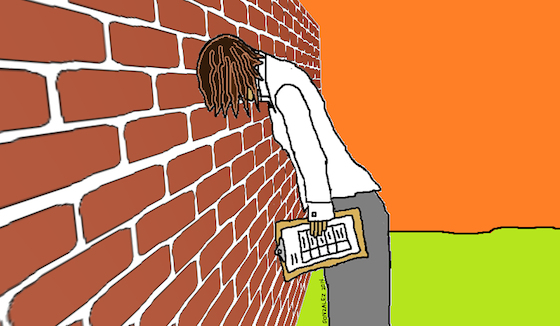
You know the basics: Establish clear rules and consequences, be consistent, keep students engaged. But even with all that in place, the small things you do could be wreaking havoc on your whole system.

Here are some habits you might have developed that are messing with your classroom management, along with more effective alternatives.
JennG-head-banging

1. Smiling at the Wrong Times

This was a big problem for me. I thought my students were pretty funny people, so when a kid took those first steps to get us off-track, I couldn’t help but smile. And that just encouraged him to continue. The irony was that five minutes later, I would be yelling at the whole class for getting too wild. Duh.

Alternative: Make a conscious effort to hold a neutral, “on-task” facial expression when you need your class to be focused. I still think it’s important to show students you have a sense of humor and appreciate theirs, but everyone needs to learn that there’s a time and place for it. Have a private conversation letting them know that there will be times when you won’t react to their jokes – that will be your signal that it’s a “serious” time.

2. Handling Problems Publicly

Addressing student misbehavior in a public way risks embarrassing the student, and if she is prone to being oppositional, she’s likely to talk back and dig herself into a deeper hole. You retaliate, and before you know it, a full-scale war has erupted.

AGet-back-to-Worklternative: Whenever possible, address off-task behavior in private. Some teachers silently place a post-it note on the student’s desk to signal that a problem has occurred, then add a check mark for every subsequent infraction.
Others just speak in a quiet voice by the student’s desk or call the student up to their own. The method isn’t terribly important; just aim for a bare minimum of spectacle.

3. All Sound, No Sight

So many behavior problems start with students simply not understanding what they are supposed to do. This is especially true when teachers only give verbal directions instead of making them visual.

Alternative: Provide visual cues for what students are expected to do. If you want them to do steps 1-4 of today’s lab, then clean up their materials, then read silently for the rest of the period, go to the board and make a quick list: step 1-4, clean up, read. Simply writing those steps on the board will save you from having to remind students or reprimand them for not following the plan.

4. Not Waiting for Quiet

When I observe teachers, I see this mistake more often than any other: They start talking to the class before everyone has completely stopped talking. To be fair, they often wait until almost everyone is quiet, but allowing that last bit of chatter to linger causes problems: Students who don’t hear what you say will either (a) turn to a neighbor to ask, or (b) follow instructions incorrectly. It’s easy to blame kids for being poor listeners, but the problem could actually be the teacher’s timing.

Alternative: Before addressing your class, force yourself to wait a few extra seconds (about five) until everyone – everyone – is completely quiet.

5. Making Students Choose Between Listening and Reading
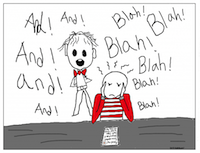
BlahBlah-1024x781When you distribute a handout to students, do you give them quiet time to actually read it? Or do you keep talking, “going over it” and constantly interrupting them to the point where they can’t process any of it? When you do this, you guarantee that students will either skip over something important on the document, or miss a vital bit of information you gave verbally. The brain can’t do both at once.

Alternative: If you have preliminary remarks to make before giving students written material, do your talking first, then pass out the papers. Once students have the document in hand, tell them you’re going to give them a few minutes to read it. Then…BE QUIET. If you must interrupt, have students turn their papers face-down and look at you, then give the announcement.


6. Only Speaking in “Don’ts”

If I tell you not to think about a hot fudge sundae, what do you think about? Yep, a hot fudge sundae. Similarly, if you tell a seventh grade boy not to tap his pencil, he still has pencil tapping on the brain.

Alternative: Tell students what to do. These directives can address the problem at hand (Jake, put your pencil under your textbook until I tell you to use it) or distract the student with another activity altogether (Jake, read number 4 for me, please).

7. Taking Too Long
five-secondsWhen a student gets off-task, an ineffective approach is wasting five minutes lecturing her about it. This not only makes you lose valuable instructional time, it also annoys the heck out of the other students, who are forced to sit and watch.

Alternative: Just becoming aware of this problem will help you improve it. Remember, you don’t have to settle every issue right away; when an interaction drags on, tell the student you’ll finish talking after class.

8. Staying Up Front

Proximity is a huge key to stopping misbehavior before it gets going. If you’re always at the front of your classroom, you can’t pick up on trouble in the early stages. By the time you notice a problem, it’s already gained momentum, making it much harder to stop.

Alternative: Move around while you teach. Do it so casually and so regularly that students just expect it.

9. Focusing on the Problems

MS-kidsIt’s natural to give your energy to misbehaviors, to only comment when something goes wrong, but you’ll get more cooperation if you give equal (or more) attention to the good behaviors, especially when it comes to students who have trouble with self-control.

Alternative: You’ve probably heard of “catch them being good,” but actually doing it takes concentration. For some students, you have to wait a while before the desirable behavior happens! Watch Daniel, the pencil-tapper: After you tell him to set his pencil down, does it stay there for a few minutes? Before he grabs it again, go over and say, “Thanks for keeping that pencil down.” Nine times out of ten, that will lengthen the time it takes for him to pick it up again.

10. Taking Things Personally

pencil-in-handNo matter what’s going on, taking student misbehavior as a personal affront can only make things worse. But not taking it personally is a lot easier said than done.

Alternative: A mental trick I used to help me step away from those hurt feelings was to think of myself as a service provider – like a dentist – and my students as patients. If my patient got a cavity, I would treat it as best I could, but I wouldn’t take it personally. If things don’t always go well, it doesn’t have to be about me.

Classroom management is so complex, it can take years to develop a style and a system that works. By replacing these habits with more effective practices, you’ll build a better classroom for everyone.

[Illustrations by Jennifer Gonzalez]

https://www.middleweb.com/19037/10-ways-sabotage-classroom-management/

Monday Motivator #34 2025-26

  How Teachers Can Benefit From End-of-Year Reflections A teacher mentor shows why reflecting at the end of the year is so important for gro...