Keep a notebook. Travel with it, eat with it, sleep with it. Slap into it every stray thought that flutters up into your brain. Cheap paper is less perishable than gray matter. And lead pencil markings endure longer than memory. —Jack London
Anyone who knows me knows I am a notebook girl. In school, I have one with me at all times, and for the cover-to-cover life of that notebook, I’m a notebook monogamist—writing only in that one.
Over the years I’ve had smaller notebooks, larger notebooks, some with book bindings, some with spirals, some with lines, some with grids, and some with blank pages in white, cream, and brown craft. No matter the exterior or interior, each notebook is full of lists, reminders, quotes, meeting notes, ideas, sketches, doodles, and book titles. When I really want something to stand out, I affix a colorful sticky note to the page and add my note to that paper-like frame. Fancy.
When each notebook is full, I place it, in all its banged-up, traveled-back-and-forth-from-home-to-school-worn-glory, on my shelf. I line it up next to the one that came before it so that when I need to remember something, I can flip back through the chronological pages of the notebooks on a quest not unlike a kind of archaeological dig.
Today, I wrote on the last page of a trusty replica of a library-card Etsy-find. She was my second notebook of this year, and on deck is a stunning Pantone beauty I purchased way back in October 2019 at one of my favorite places on the face of the earth—the Strand in New York City—when I was there for a coaching conference with two of my close colleagues. For four days, the three of us crowded into a small hotel room at night, and shared nonstop conversations about what we were learning and the hopes for our schools over late dinners and on the long train ride home from the city. So this new one, this notebook purchased pre-pandemic at a time when I was in a crowded city that was so alive, feels extra special. Just looking at the pages and the color swatches sprinkled throughout fills me with joy.
However, as odd as this may sound, I'm always a little sentimental on new notebook days. It's strange to set something aside that's been a constant companion for so many weeks and months—and this one— well, it's been a really hard and oftentimes very lonely year at school, so there's a lot of tangled heartache in this little spiral.
Nevertheless, our days are becoming a little brighter, and even the hint of a closer-normal-school year on the horizon fills us with collective hope again. This new notebook’s destiny will be to capture moments of where we are, how far we’ve come, and how we will start again. As I crack the cover and my pencil is poised over the first pristine page, I'm proclaiming that good things and better days are going to happen in the active lifetime of this new notebook. I invite you to join me in this promise by reaching for your own notebook—in whatever form it might be—and to pick up your pen.
Self-care means giving yourself permission to pause.
—Cecilia Tran
The buzz of everyday school life can easily have us running around without much focus. In my role as a teacher leader and instructional
coach who travels to different buildings within our district, my days are filled with voices, questions, and concerns.
Every day is different, and it is easy to feel overwhelmed. I enjoy working with people, and I’m outspoken and highly engaged wherever I
am. But I’m also an extrovert with introvert tendencies, which for me means that I need alone time to recharge and refocus.
In a world of high demands and a variety of voices, I can’t help but ask, “How are we renewing our thoughts as educators every day?” Here
are a couple of things I have learned and tried throughout the years. I understand that when it comes to self-care and renewal, consistency
is the key. But I also understand that just having a set of tools to draw from helps me understand what to do when I start feeling crowded
with thoughts.
Inspiration
The Note app on my phone has become one of my favorite tools. Not only does it serve as a great ongoing to-do list, but I can also organize
information in folders that I can access anywhere. I like to add to this folder powerful statements from professionals I admire. Recently, I
added this one to my repertoire:
Our kids aren’t going to outgrow us. If we want our kids to get better, we have to get better ourselves. —Cornelius Minor
Such a powerful reminder from Mr. Minor that as educators we are always becoming and that we must continue to grow professionally.
Another powerful quote I currently have is from Justin Talbot-Zorn and Leigh Marz, who were inspired by the work of Ta-Nehisi Coates:
Generating good ideas and quality work requires something all too rare in modern life: quiet.
This particular quote has served me many times when coaching teachers. I must respect their quiet and processing time. They deserve it.
Visual Reminders of Strength
In my cloud folder, I keep an album of photos of students who inspire me to do this work daily. Some of them are photos from former
students who remind me that they show up every day despite the work being difficult. Other photos are of current students who are keeping
me curious about teaching and learning.
Whenever I receive a card or a letter from a student, I take a photo and add it to this album. It reminds me that someone does notice what we
do, that what we do matters. I also like to keep a pocket chart in my oce or in my classroom to add any thank-you cards or notes I might
receive throughout the year from other sta. It lifts me up to reread those cards. Every time.
Disconnect for Five Minutes
I have learned this strategy from a colleague who goes on a walk around the school every day (yes, even in winter). I would often sit in my
office and, from my window, see her taking a relaxed walk around school. No music, no headphones, no cell phone, no distractions. I
decided to try this myself. Even if it just meant that I would sit outside and catch some sun for five minutes. It didn’t cost me anything. I
didn’t have to change schedules for it to happen.
In no time, I learned that those five minutes provided me with the calm and clarity I sometimes needed. Some days I just sat in my car and
listened to my favorite song.
These three simple tools have helped tremendously during the year. There were times when I felt overwhelmed with other teachers’ voices.
I couldn’t hear my own. And that bothered me.
There were other times when a situation with a child tested my patience and I needed to remind myself why I was in his or her life. Other
times an extra five minutes of sun just kept me grounded and reminded me that people are just people.
Renewing my thoughts daily is my responsibility, because there will always be noise, questions, concerns, or just simply complaints that
take away any calm or serenity I had first thing in the morning. I can’t control what happens, but I can choose what to do when those
moments arise.
My family visits an indoor water park in Wisconsin Dells every year for a short early-spring vacation. It’s a popular destination and although we try to beat the spring break rush, we inevitably face some long lines. I actually love waiting in water park lines, because the majority of people don’t have a phone with them, so family conversations and laughter take priority over scrolling and screens. The slides at this particular water park aren’t for the faint of heart, so it’s a long climb to get to the top so that you can enjoy the trip down. Climb a few stairs, wait. Talk and laugh, climb a few more stairs. Wait.
It was in such a line two years ago that I noticed a ledge against the wall, fairly high up toward the ceiling of the water park. I don’t know what the ledge’s original purpose was, but it had become a target for ponytail holders. I chuckled to myself and told my daughters, “Look, over there. People must be trying to fling their ponytail holders from this line onto the ledge.” There must have been hundreds of elastic holders scattered on the ledge. I had so many questions. Who was the first person to fling their holder onto the ledge? How long did it take before someone else tried? How long had the hair ties been there? Was anyone from the water park going to clean them up? My daughter Maddie wanted to try the stunt herself but wasn’t quite willing to forgo her ponytail for the rest of the day. The line eventually moved, and we climbed a few more steps.
Imagine my surprise the following year when we returned to the water park. Same line, same slow crawl up the wooden stairs. I had actually forgotten about the ledge when something red caught my peripheral vision. I turned to look and let out a joyful “ha!” when I saw what the water-park staff had done. Apparently they had noticed the ledge full of abandoned elastic hair ties and had decided, rather than expending their energy on cleaning it up, to make it a game. There sat a large red-and-white target with a black peg sticking out of the bull’s-eye. It was a challenge, an invitation to play. Could you slingshot your ponytail holder onto the bull’s-eye? It looked like only a handful of people had done it, though many had tried and failed. People entered the line with a ponytail and left with their hair hanging down their back, unable to resist the challenge.
I think of that target often in my classroom. How often do I fight against the current? How often am I trying to figure out how to “clean up the hair ties” rather than just making it a game?
This year while I’m teaching 100 percent remote, I’m trying to lean into the unexpected and find moments to play. I had some days when the turned-off cameras and muted mikes began to take a toll. Rather than admonish the kids for not participating, I downloaded a crickets’ sound effect on my phone and played it during the silence. When a student insisted on having her dog, Rocco, on her lap and on camera for every single lesson, I added his name to our class roster.
What about you? What is something that could take a toll on you this year, but you’re claiming it as an opportunity to play?
Fourth-grade teacher Todd Flory enjoys reading Harry Potter with his students at Wheatland Elementary in Wichita, Kansas. But captivated as the kids are by Quidditch, floating candles, and paintings that talk, Flory is working with them on something else—building empathy.
“We use the book to talk about the importance of understanding and accepting people who are different,” Flory says. Through the medium of books, he feels he is helping students become more sensitive to the feelings and experiences of others.
Research supports the idea that reading can expand students’ worldviews and build empathy. In an article in an American Psychological Association journal, academics from Italy and the United Kingdom found that the Harry Potter books in particular helped students gain an understanding of others. That’s important, says David Kidd, a postdoctoral fellow at the Harvard Graduate School of Education who has studied empathy and literature. “We tend not to extend empathy to people in other groups as readily as we do to people in our own groups. By reading stories showing people who are different from us, it helps us see them as full people.”
Author Alan Gratz, whose book Refugee tells stories of children fleeing persecution, hopes his novel opens students’ minds and hearts to diverse experiences. “The plight of refugees is so far removed from many children’s lives, thankfully. But that distance means they are often unable to understand who these people are, and why they’re walking for days and weeks and thousands of miles to find new homes,” Gratz says. (His latest book, Grenade, deals with moral issues faced by Japanese teens during World War II.)
Want to use fiction, nonfiction, and poetry to build empathy and develop students’ literacy skills? Read on!
Learn From Fiction
“Literature is an excellent tool for building empathy. It’s like a match made in heaven,” says Heather Schwartz, practice specialist at the Collaborative for Academic, Social and Emotional Learning. “When we read stories, we ask ourselves, ‘Why is the character doing this? What’s going on with him or her?’”
Consider Wonder, by R. J. Palacio. It’s told from various perspectives and is about a boy named August who has facial deformities and is encountering school for the first time. One study conducted by a psychology professor at Virginia’s Mary Baldwin University in collaboration with a sixth-grade English teacher found that sixth graders who read Wonder showed improvement in looking at things from others’ perspectives. That’s no surprise to third-grade teacher Stacie Delaney, who teaches at Tabernacle Elementary School in New Jersey and has read the book with her students. “One of my students has a significant disability; she used to have a tracheostomy tube. My students understand that in the book, August looks different but that’s okay. We all look different,” she says.
Justin Minkel was teaching in New York City when terrorists struck on September 11, 2001. In the aftermath, Minkel noticed his fourth graders had absorbed negative stereotypes about Middle Easterners. He responded by bringing in books aimed at shattering those stereotypes, such as The Day of Ahmed’s Secret, by Florence Parry Heide and Judith Heide Gilliland, about a boy in Cairo. He had students write down what they thought they knew about people from the Middle East and then reexamine their assumptions after reading this book and others. “I asked, ‘Are the things we thought really right?’ And they realized they were not,” he says.
Author Kelly Yang, whose book Front Desk tells the story of an immigrant couple and their daughter, Mia, who manage a motel, says kids like to read about characters who are relatable. “Mia’s problems feel real and immediate to kids because they care about her,” Yang says.
Delaney urges fellow teachers to be intentional about introducing empathy lessons. She suggests framing conversations about books with empathy-driven questions, like asking students how they think characters feel. Writing assignments on perspective are helpful, as is asking kids to act out a story.
Go Deep With Nonfiction
Kids love to learn through storytelling, whether it’s fiction or nonfiction, says Lauren Tarshis, editor-in-chief and publisher of Scholastic Classroom Magazines and author of the best-selling I Survived book series. She often hears from teachers whose students were inspired by an article in one of the magazines—water needs in Africa, a hurricane in the United States—to sell lemonade or T-shirts to raise money. “Teachers are sharing a story, and watching how it becomes a catalyst for kids to want to learn more, to take action, and to connect with people they might not have connected with before,” Tarshis explains. One article that drew strong student reaction was about a baby elephant named Ishanga, orphaned in the Tsavo National Park in Kenya after poachers killed his mother. The article described Ishanga’s rescue, and teachers reported that students were raising money to “adopt” orphaned elephants, even in lieu of having a classroom pet.
At Westland Middle School in Bethesda, Maryland, all students read the same book each summer. Rachel Johns, the International Baccalaureate Middle Years Programme Coordinator, seeks out books that develop empathy. She has used I Am Malala, the autobiography of Malala Yousafzai, an advocate for girls’ education in Pakistan who was shot by the Taliban. “It’s our responsibility as a school to implement lessons that encourage students to take a walk in someone else’s shoes,” says Johns.
Perrine Punwani, an English language arts teacher at Hardy Middle School in Washington, D.C., likes to pair fiction and nonfiction. In conjunction with A Raisin in the Sun, a play by Lorraine Hansberry about a family living in segregated 1950s Chicago, Punwani has her students study maps to better understand segregation. She also guides the class through related discussions about identity, discrimination, and cultural pride.
Build Empathy With Poetry
A Raisin in the Sun references a Langston Hughes poem, “Harlem (Dream Deferred),” in which the poet writes, “What happens to a dream deferred? Does it dry up like a raisin in the sun?” Punwani assigns the poem before reading the play and asks students to think about what it would feel like to delay their dreams.
Reading and writing poetry can be a powerful exercise in empathy building. “When we read poetry, we can inhabit the lives of others,” says poet and writer Georgia Heard. She points to another Hughes poem, “Mother to Son,” in which he writes, “Life for me ain’t been no crystal stair.” This kind of imagery can stir emotion and build empathy among readers, she notes.
Shari Carter, who teaches kindergarten at Cecil D. Andrus Elementary School, in Boise, Idaho, says she loves reading the Shel Silverstein verse book The Giving Tree. “It’s been a favorite of my students,” she says of the story about a friendship between a boy and a tree and how it changes over time. “There are so many things to explore.”
At School Within School, in Washington, D.C., third-grade co-teachers Fran Ewart and Tina DeAnna start the year with the poem “If I Were in Charge of the World,” by Judith Viorst, written from the perspective of a child. They ask students to write and share a poem of their own with the same title and theme, which helps them better understand one another’s aspirations.
Vered Brooks, who teaches grades 5–7 at The Acera School, in Winchester, Massachusetts, says The Crossover, a novel in verse by Kwame Alexander, is a favorite. The story examines the hardships of adolescence and loss. “Through language like metaphor, we can access some really difficult things in the book,” says Brooks, adding that some of her students cried at the end. “They realized he’s a kid like them—but not like them.”
Many of us are feeling the “pandemic wall” right now.
This is understandable given the multiple crises the past year has wrought that at
times feels never-ending. Collectively, we are facing crises of Health, Economy,
Natural Disaster, Democracy, and Systemic Racism. And then, within all of this larger
context, there is the crisis in our schools.
Many are looking forward to a return to normal school next year post-pandemic—but
do we want to return to the old normal?
Even pre-pandemic, the old normal was one in which only 54 percent of students feel
hopeful about their prospects in future school or to achieve their goals; and, one-
third of students report they are struggling or suffering. The old normal is one in
which schools are responsible for making sure our nation’s children are fed. The old
normal is not equitable nor just.
We are, hopefully, at a turning point for the pandemic. We are moving out of triage
mode. Vaccines are being distributed, cases are dropping. While we are still feeling
very much in the darkness, glimmers of light are beginning to signify the arrival of a
new dawn, of a new spring.
This in-between moment offers us a chance to ask what these crises have taught us
about who we are, who we want to be, and what we want to be the “normal” to
which we return.
The Seeds of Opportunity in Crisis
In modern-day English, the word crisis simply means, “a time of intense difficulty,
trouble, or danger.” However, the roots of our word “crisis” are broader. The word
comes from the Greek word krisis ‘decision’, which is from PIE root *krei- “to sieve,”
thus “discriminate, distinguish.” In Chinese, the word, (wéijī), is composed of
two brush strokes or words: one brush stroke stands for danger, the other for
opportunity.
Decision and opportunity.
In this moment of multiple crises lie the seeds of opportunity. Opportunities to make
new decisions—to discriminate, to “sieve”—a.k.a. to retain the potential good and
allow the rest to pass—to imagine new ways of being, and to take action to co-create
those possibilities.
This has borne out in history. Consider that in the 1920s inequality was on the rise
and there was very little social safety net. The subsequent crash of the stock market
in 1929 and the Great Depression—true crises of epic proportion—provided the
opportunity for reimagining our economic system and social safety net. The New
Deal was created, which re-started the economy and created the Social Security
Administration to ensure that those most vulnerable—the unemployed, the young,
and the elderly—were supported.
There are seeds of opportunity in crises—but we have to create the conditions for them to
sprout.
These conditions include:
1) Creating time and space for reflection.
We need to create time to reflect on the big picture is the antidote to scarcity and
allows us to connect with ourselves and with others. We need guarded time to
consider what is happening, what we’ve learned from this moment, and on how it
relates to what we want for the future.
2) Reframing the problems as opportunities.
This time has been hard. And, while we have all been in the same storm, we haven’t
all been in the same boat—it has been harder for some than others. What are the
problems we can reframe as opportunities for new solutions and new ways of
thinking and being?
3) Asking fundamental questions.
What does it mean to live a good life? What is a thriving community? Who do we
want to be as Americans? As global citizens? We need to return to the fundamental
questions of who we are and who we want to be before we rush to solutions.
4) Collectively re-visioning.
As Robin D.G. Kelley teaches us, “Without new visions we don’t know what to build,
only what to knock down.” After asking our fundamental questions, let’s look at our
collective answers to see where we can create shared visions for how we move
forward.
One Possible Way to Participate
These four conditions can be created in many different ways and do not require a
movement—simply a person or two intent on sowing seeds together.
But collectively taking the time to reflect and learn from one another might be the most
powerful way forward of all.
This is the goal of 100 Days of Conversations About School—an initiative that is
catalyzing community conversations across the country about the future of school
and society in a practice of democratic deliberation and re-visioning for the first 100
days of the new administration, from January 20th to April 29th, 2021.
Rather than count on our leaders to create the solutions, we believe it is the voices
and perspectives of young people, families, and communities that should be
centered in our new visions. For this reason the process is designed to center the
voices of young people and educators—both in the conversations themselves and
then in the policy and practice recommendations that emerge from identifying
themes across the conversations.
The 100 Days conversation experience itself is enjoyable, powerful, and connecting.
The questions are pre-designed to foster reflection and connection—which has felt
reassuring and needed in this moment of disconnection and isolation. 97.4% of
participants have said the experience was either “extremely” or “very” positive for
them, and 92.1% felt more connected with their fellow participants after the
conversation.
Young people, in particular, have expressed they feel heard and respected in a way
they rarely do and appreciate that the questions aren’t watered down, but rather
they’re asked deep and meaningful questions and that they have their turn, just like
adults. Listen to Juwaria, a.k.a. J.J., a high school student from Minnesota, talk about
her experience. It also has humanized educator experience for them—getting to
understand better what’s truly happening behind the scenes for their teachers. The
real power of this project comes in combination of personal reflection and deep
listening to others—and in what we can do together when we find commonalities
and a shared vision.
Beyond the individual experience, the process is a powerful tool for organizational
reflection. 100 Days partnered with Local Voices Network to make transcriptions of
the conversations available to every participant, which makes this a unique
opportunity for schools and organizations to learn about views of multiple
stakeholders within each community. Teacher Powered Schools is hosting
conversations in each partner school and then will look at the transcripts together to
consider cross-school learnings. MN Young Champions and their new youth-led
nonprofit, Bridgemakers, is organizing young people across the state of Minnesota to
participate in conversations, and will use learnings to bring the voices of young
people and educators directly to policymakers this summer. Both the small, rural
town of Belgrade, MN, and the large urban district of Ferguson, MO are hosting
multiple conversations with students, families, and educators as part of their student
and family engagement strategy this spring.
Hosting with 100 Days of Conversations is easy and takes less than two hours of time
—from signing up to facilitating to thank you notes. It happens in three easy steps:
1. Sign up to be a host.
2. Choose an adult and some young people (5-8 people total), then pick a time
on Calendly to get a Zoom link. The Zoom link will automatically record so you don’t
have to worry about downloading/uploading files.
3. Show up at the conversation with the facilitation protocol—it can be read
verbatim.
*And if you want more information, there’s the step by step Host a Conversation
Guide with everything from project goals to hosting to thank you notes!
Over 200 individuals and organizations across all 50 states have already signed up to
partner to host a conversation, but the more people who participate, the more
powerful the results. Consider ensuring your and your students’ voices are heard.
Ultimately, regardless of whether you host a conversation, organize with others, or
simply take some time to reflect by yourself, each of us seeking the seeds of
opportunity in this moment of crisis will prepare us to better emerge beyond the
pandemic wall, and beyond this moment, not only victorious but transformed into
new and better ways of being.
Building rapport online is tough sledding—especially when students aren't required to turn on their camera.
After all, if you can’t see your students, you don’t even know if they’re in front of their computer, let alone whether you’re making any connection with them.
It isn’t unusual for a teacher to talk and teach their heart out to a wall of blank screens.
But despite the hurdles of online teaching, there is a relationship-building strategy that still works. It’s also super easy.
So what is it?
It’s to leave short, personal notes for individual students after class has ended. They can come in several forms—email, Remind app, the Classwork tab in Google Classroom, etc..
All work well. But to be most effective, each note should meet three criteria:
Uniqueness
Avoid trite language like “good-job” and “way-to-go,” which have lost their meaning due to overuse. Now they make students feel as if they’re just another face in the crowd.
Instead, use the student’s name when addressing them and refer to something in particular they said or did.
This is very powerful because it shows you’re paying attention to them as people and individuals. Keep a look out for anything out of the ordinary, anything you could only say to them—and then seize it.
Specificity
Specificity is the key to finding the most influential words to put in your message. Focus on things your students would never in a million years think anyone would notice.
You don’t have to write paragraphs.
Keep your missives brief and simple, but make them distinct. Refer to talents your students possess or success characteristics you see in them that they themselves may be unaware of.
Discerning and honing in on these gifts is one of the keys to unlocking intrinsic motivation.
Honesty
Kids these days are more aware than we think and can identify a phony from a mile away. So whatever you write in your note, make sure it’s honest.
Make sure it reflects what you really see in them or their work.
In this way, you build your reputation as someone who can be trusted—which is crucial to having influential, behavior-changing relationships with even the most challenging students.
If you fudge, even a little, eventually they’ll find you out.
Something More
Notes connect, encourage, and praise in a way that enliven a love of learning and keep students heading in the right direction. But because of the pandemic, this simple, even primitive, way of communicating has taken on a new level of importance.
If you’ve never met your students in person, or even seen them over Zoom, it’s the only way to start building genuine individual rapport.
This generation, world-weary and jaded in so many ways even before Covid, shrug in the face of flattery and compliments that made students blush not ten years ago.
Nowadays, it takes something more—your awareness, perception, and curiosity about your students—as well as their trust in the veracity of your words—to get through to who they really are.
By Elizabeth Hagan, Lisa Friesen, Casi Hodge and Sunday Cummins
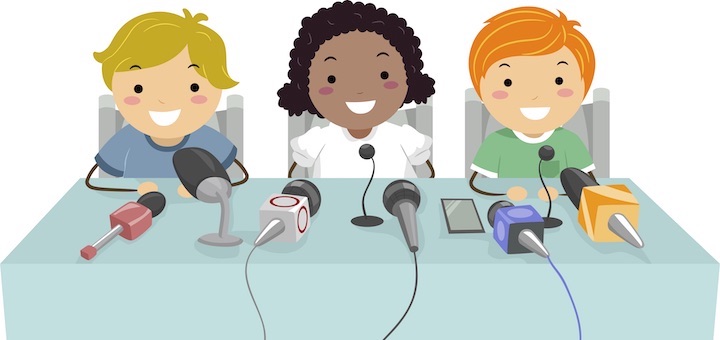
“Interview an expert on this topic!” “Interview a scientist in the field!” “Interview a relative about this period in history!”
Asking our students to interview someone sounds like an engaging learning activity, right? For many students, though, this may be a daunting experience, and while they may enjoy the break from traditional modes of learning like reading, writing and classroom discussions, they may not actually learn that much.
Why? Because – similar to reading – listening to what we hear during an interview requires comprehension and the active construction of meaning.
If our students are not prepared to engage in this kind of deep listening, they may miss out on learning.
Setting Students Up to Succeed
So how do we prepare our students to benefit from the interview experience? In Scaffolding Learning, Scaffolding Language (2015), Gibbons writes, “Like reading, effective listening depends on the expectations and predictions about content, language, and genre that the listener brings to the text” (p. 184).
In other words, for our students to get the most out of an interview, we may need to teach them how to actively draw on three areas of knowledge:
✻ what they know about the topic ✻ what they know about the language used when talking about that topic ✻ what they know about the genre of “interviews”
In pursuit of exploring what this looks like, Elizabeth, a reading specialist, engaged a small group of fifth grade students in a project driven by the essential question, “What does it mean to ‘give back’?”
The group of students included two emergent bilinguals. One speaks Arabic at home and the other speaks Amharic. Both are at the expanding level on the WIDA standards for language proficiency.
Develop Background Knowledge
During lessons with Elizabeth, the students read a set of sources about people who have “given back” to their communities in some way:
✻ a girl started a lemonade stand to raise money for coats, ✻ a young man started a free bicycle repair shop, ✻ a boy, Noah, started a “cool bandage” project for kids who get lots of shots during cancer treatments.
A fourth “source of information” was an interview with Paul Long, a local motivational speaker, who is involved in many projects that benefit others including Noah’s bandage project.
The students were excited about the interview. One reason may have been that they understood the topic better and had some idea of what they might talk to Paul Long about during the interview.
Write Questions in Advance and Practice
Elizabeth’s students had never engaged in this kind of conversation with an adult expert so it was important to prepare. Drafting questions to ask a person during a structured conversation is one way to introduce students to the genre of the “interview.” Students get a sense of the give and take that will occur. This is also a chance to synthesize what a student has already learned about the topic and think about what might be important to learn during the interview.
When Elizabeth’s students did interview Paul Long, they seemed shy. They stuck to the questions they had drafted and did not ask Long for any additional details. On reflection we realized the students might have benefited from practicing this interview with others.
In Scaffolding Language Scaffolding Learning (2015), Gibbons describes how when we are in a conversation with someone, we are always drawing on “those ‘scripts’ that are familiar to us through previous experiences” (185). Practicing asking others the interview questions and thinking through the answers can deepen students’ comfort with the language they need to employ during this type of meaning-making format.
This kind of practice also provides students with an experience they can draw on later in more formal settings. In the future, Elizabeth plans to ask students to interview people they know first, perhaps even using the same set of questions they are planning to use later with someone they do not know as well.
Predict What the Interviewee Might Say
Because the students had already read and discussed three sources on the topic of people “giving back,” they had some idea of what Paul Long might say. As listeners we naturally draw on knowledge we already have on a topic to predict what a speaker might say. Noticing when something is being said that’s similar to what a listener already knows about the topic helps them monitor for meaning.
During the interview Long talked about his work on Noah’s Bandage Project, and the students’ eyes immediately lit up as they connected to information they had already read and discussed. Later they seemed to remember details from this part of the interview more easily than others.
Making predictions about what we will learn during an interview based on background knowledge also helps us notice when something is being said that contrasts or adds to what we already know about the topic. Paul Long told students that giving back doesn’t mean a person always has to give time or materials.
Just smiling at someone, he said, can be a way of “giving back” – a way of making someone’s day better. This idea had not been a part of the students’ previous discussions. They noticed the contrast and quickly latched on to this idea. (For fifth graders, giving a smile probably feels very easy to accomplish!)
Record the Interview for Close Listening
When our students are in the midst of an interview, it may be difficult to stop and take notes. This requires determining what’s important on the spot and then figuring out how to convey this in short bursts of writing. That’s a burdensome load for some of our students especially if they are learning English.
With this in mind, Elizabeth recorded the interview for the students to revisit later. She chose a short clip that addressed an aspect of “Why give back?” they had not discussed as they read the previous sources. She kicked off this follow-up lesson by asking the students to think about the question, “What did this conversation with Paul Long add to what I already know about this topic?” They listened closely and discussed what they heard, adding to their notes.
Interviewing others can be an engaging activity in any subject. With some intentional instruction, it can be an even more powerful experience, expanding knowledge and building useful skills for future learning opportunities.