Sunday, December 15, 2019

Monday Motivator #18 2019-20

Books and Activities from Around the World to Celebrate the Holiday Season



We’re in the midst of the holiday season here in the United States. Often when I visit schools or teacher blogs, or get a peek at other classrooms this time of year, I see themes such as “Christmas Around the World” or “Letters to Santa.” When I see these topics being covered in classrooms, I often wonder if there are any international students with different languages, traditions, beliefs, and cultures in that classroom community.
Recent statistics show that there are more than five million Limited English Proficient (LEP) students in public schools in the United States. This statistic is an invitation to reconsider how we present holidays from around the world, and use this time to celebrate different cultures and traditions. Luckily the choices for texts and activities are nearly endless, and the possibilities for learning are many. I would like to share with you a few simple ideas for books, themes, and goals that build on children’s natural curiosity about different cultures and eagerness to learn.

Focus on Similarities: Peace and Hope Themes

Even though my LEP students come from every corner of the world and bring with them many different traditions, I’m still able to find some things we all share in common. It is those similarities that we as educators can tap into and explore.
For example, the theme of peace is one that works well with any culture at this time of year. When I explore the theme of peace with students, I start out with a perfect mentor text for this occasion: The Peace Book by Todd Parr. The simple yet powerful message in this book makes it possible to discuss the topic of peace with students in different grades, from the very youngest to the most mature elementary students.
After several discussions of what peace means for each of us, we invite families to contribute their ideas.
Together we create “The Peace Mural,” which displays our ideas and concepts of peace. The final product stays for several weeks on our school wall. It reminds us that regardless of where we come from, who we pray to, or what we believe in, we all want peace. The mural gives each of us a clear understanding of what it means in our own culture.

Another wonderful and successful theme is to focus on wishes. The procedure I follow is very similar to the peace theme. I choose a mentor text that lends itself to powerful discussions. For this theme, I used the book Wish: Wishing Traditions Around the World by Roseanne Thong. In this book, the author introduces us to how families from around the world have their own traditions when it comes to making a wish.
For example, in China children throw red and gold scrolls at a banyan tree. In Guatemala, children fly huge kites to honor the dead and carry wishes. Books like this one help students gain more global knowledge. The message is a simple one: even though traditions might be different, people from around the world make wishes, and they all come from the heart.

Celebrate Differences: Holiday Traditions Beyond Christmas

Children are naturally fascinated by other holiday traditions and the roots of those celebrations. If we start teaching our students about respect and acceptance from an early age, then this new generation will develop an awareness of and respect for other cultures. This understanding is a crucial component of becoming a global citizen. Here is a list of books I recommend to begin the journey of learning about other holidays around the world.
Books on Diwali, the Hindu Festival of Lights
Lights for Gita by Rachna Gilmore and Alice Priestley
Gita is celebrating Diwali in her new home, far away from her beloved New Delhi. She realizes how much she misses her warm country while preparing for this celebration. As her family gets ready to celebrate their special Festival of Lights, an ice storm leaves the entire block without power. Her parents and best friend encourage Gita to light the diyas for the festival, creating an atmosphere filled with love, warm memories, and new beginnings.
This is a fantastic work by the National Geographic team, with amazing photographs illustrating the festival. With striking images, facts, and historical notes, this book will be a wonderful resource in any classroom.
Books on Ramadan, the Ninth Month of the Islamic Calendar
The Last Night of Ramadan by Maissa Hamed
This is the first book from a series titled Enjoy Islam. These texts were created with the intention of educating and informing readers about traditions within the Muslim culture. The series focuses on the Holy Month of Ramadan and their inspiring traditions.
Celebrate Ramadan and Eid al-Fitr by Deborah Heiligman
This book is rich in photographs, accompanied by simple and clear text.
Under the Ramadan Moon by Sylvia Whitman
This picture book describes in a poetic way a family’s activities during Ramadan. Using the phrase “under the Ramadan moon” repetitively, the author is able to teach readers about the holiday. For example, the text includes the lines “we hang bright lights under the Ramadan moon” and “we give to the poor under the Ramadan moon” to spell out specific Ramadan traditions.
Books on Eid, a Muslim Holiday Celebrating the End of Ramadan
The Best Eid Ever by Asma Mobin-Uddin
Aneesa is getting ready to celebrate Eid with her grandmother, but she can’t hide her sadness from having her parents far away during this special time of the year. Aneesa and her grandmother go to pray, and it is at the prayer hall where she meets two refugee girls who won’t be able to wear new dresses for this holiday. That’s when Aneesa finds the true meaning of Eid, by helping other people.
This book is part of a series called Festival Time!. This particular book focuses on Ramadan and Eid, including dates and the significance of the fasting tradition.
It is my wish and hope that during the holiday season here in the United States, we remember what a wonderful opportunity this time is for helping students understand and appreciate other cultures and traditions. We live in a world that is constantly changing, advancing, and progressing. Let’s use the power we have as teachers to not only acknowledge different traditions, but celebrate them.

Sunday, December 8, 2019

Monday Motivator #17 2019-20

A Super Easy Way To Lower Your Stress

Smart Classroom Management: A Super Easy Way To Lower Your StressThere are techniques that can help you maintain a calm disposition throughout each teaching day.
Even if chaos is swirling around you.
We’ve covered several in the past, both in our books and here on the website.
But today I want to share with you a super easy method that is scientifically proven to put you in a more relaxed state.
And keep you there.
It’s used by archers, golfers, surgeons, yoga teachers, and others whose performance is so directly linked to their ability to keep their composure.
So what is it?
It’s called nasal breathing, and it’s exactly what it sounds like.
The way it works is from morning bell to dismissal, unless you’re talking or eating, you’re going to practice breathing through your nose.
The benefits are many.
1. The narrow passages of the nose force you to slow down your breathing, filling the lower half of your lungs and stimulating parasympathetic nerves that automatically calm the body.
2. It causes you to be aware of your breathing. It keeps you attuned to the present moment without having to remind yourself again and again to focus on what’s in front of you.
3. It improves your energy level. A full day of deep, nasal breathing will circulate more oxygen throughout the body and allow you to feel refreshed at the end of a long day of teaching.
4. It lowers blood pressure and heart rate, which sends calming signals to the brain, allowing you to be naturally and effortlessly more pleasant and likable.
5. It increases respiratory function and fitness, filters out millions of particles of foreign matter per day, and more effectively expels carbon dioxide waste from the cells.
6. It’s easier to stay disciplined verbalizing only what your students need to succeed. It keeps you from reminding, narrating, and micromanaging them through every little this and that.
7. You’ll move more efficiently. Slowing your breath naturally through nasal breathing will slow your body as well. Your movements will become graceful and economical.
8. It very effectively removes excitability from your classroom, which is one of the biggest causes of misbehavior. Students take their cue from you, and if you’re calm, they will be too.
One Easy Change
Although it may take a few days to develop the habit of nasal breathing, you’ll find it delivering blessed relief within your first hour of practice.
The stressors themselves may still be there, but your ability to handle them and avoid your physiology from being negatively impacted will greatly improve.
In time, your days may even take on a meditative quality.
This one easy change will not only make you feel, and even look, a lot better, but it will open your eyes to how much stress you’ve been experiencing.
It will show you just how profoundly a naturally calm demeanor positively influences those around you.
Your students. Your colleagues. Even the loved ones you go home to.

Sunday, December 1, 2019

Monday Motivator #16 2019-20


Taking Back Control of Your Classroom: Hitting the “Reset” Button


A good teacher spends some time getting to know their students and establishing classroom protocol at the beginning of the school year. It’s a great time to jumpstart those teacher-student relationships as well as lay down the law. But as the first few weeks progress, there is usually a steady stream of students trickling in and out of the classroom until all of the scheduling is done. These may be new students, transfer students, or students who came back from summer vacation a little late.

The problem with these fluctuations is that not all the students were able to hear your sales pitch at the very beginning of the year. As the year continues there is often more turnover and each classroom takes on a personality of its own based on the mix of students. So what do you do when the petty, annoying behaviors start to become common place and the classroom procedures are rarely being followed?

Hitting the “Reset” Button

I suggest doing what a friend of mine calls “hitting the reset button". Basically, you revisit the expectations and maybe even some of the relationship building that you normally do the first few days of school. This is also something you should do if you happen to be moved to a different classroom (for whatever reason) within the same school. You don’t know what rules and procedures were in place before you arrived, so let students know that everything is changing with the new leadership and go over how things will work in the future.

If you plan to do this because student behavior is beginning to get worse, pay attention to how you approach it. It is important that you approach it correctly in order to get good results. DON’T tell your students that because they have chosen to act like animals you are being forced to start at the beginning and review your “rules".


How to Get it Right
The best thing to do is to pick a time that seems natural such as coming back from a long break like Thanksgiving, winter break, or spring break. If a class is out of control and a break or long weekend is approaching, try to wait for that time. Otherwise, use a Monday coming back from the weekend. It really won’t work well if you do it mid-week.
To achieve great results, be sure you spend time planning the day well. If you choose to wing it, you will certainly run into problems. The time spent planning will payoff in fewer headaches for you and lots of extra energy (you should not feel like a semi-conscious zombie when you walk out the door to go home). When the day approaches, let students know that you are all going to hit the reset button so the rest of the year can be as productive as or more productive than the first half.
Plan Activities
Since you already know each other, you may want to do an activity that focuses on team building or the importance of rules and regulations. Then have your class (individually or in groups) list all of the procedures that are already in place. This is your opportunity to take a good look at how well you have communicated the procedures. Do the students know them or are they getting them confused with the procedures for other classes? Help them remember and/or modify them until they are all listed and all correct.
Have a Discussion
Next, spend some time discussing with them what is working and not working. What needs to be changed? It’s important here to really listen to your students. Don’t be dismissive. Maybe they have some legitimate reasons why something is not working as you planned. Perhaps a certain procedure could be modified (or even exterminated) because it doesn’t gel well with other structures set in place within the school.
The fact is that your students could be your biggest asset in setting up things that work. As a combined group, they have been through more teachers and classes than you can count. They have been in classrooms that are zoos and they have been in classrooms that were run like well-oiled machines. Perhaps the most valuable thing they can tell you is the answer to these questions… “What is working in your other classes?" and “what do your other teachers do for this?"
Those two questions can be a vital source of information for you. We all know that we should be talking with other teachers about what they are doing. But everybody is busy and sometimes, teachers who have a super successful procedure in place don’t realize that other classrooms aren’t doing the same thing. Because of this, they might not realize that their procedure is solving a problem you are having in your class because they may have never seen that behavior exhibited in their class.


If you just laid down the law at the beginning of the year as most teachers do (and should), then this process will usually do an interesting thing. At the end of the day, you will find that most of the rules and procedures you dictated to them are still on the list. However, now you have some modifications and new procedures that will work great. More importantly, you have more contribution from your students. They feel like they just helped make the rules. Very few of them will acknowledge the fact that they started with a framework you already gave them and didn’t really make many changes. So basically, the process allows them to adopt the procedures you gave them as their own.
Follow the New Rules
Be sure to immediately begin implementing all of the new protocol and the rest of the year should go more smoothly. Sometimes everybody needs to refocus and reset. The lost instructional time for this process of hitting “reset" will be made up throughout the rest of the year because you’ll spend less time correcting student behavior.

Sunday, November 24, 2019

Monday Motivator #15 2019-20


Gratitude: A Powerful Tool for Your Classroom

By exercising the “gratitude muscle” with a journal, students can harness positive thinking to increase their grades, goals, and quality of life.

Would you like to improve the culture in your classroom and your life? Try gratitude. Based on my 10 years of teaching experience, this is the most powerful tool that I know.
Gratitude has empowered me to teach more effectively, appreciate my individual students, grow in my profession, and enjoy life. Utilizing gratitude, I am able to model one of the most important lessons in life, having a positive attitude, especially about the aspects of life that challenge me.

Gratitude Journal

To get started in your classroom with gratitude, I recommend actually writing your own gratitude list for a few weeks and feeling its power. Then you can share your example and start the activity with your students. You might start your gratitude journal with being thankful for being alive, for having food to eat and clothes to wear. If you can think about something related to teaching that you're grateful for, that's even more powerful

My students use a composition book and start every day by writing five gratitudes. If you have computers or iPads, you might have the students start a file to save their daily gratitude journal. By the end of the year, we each have almost 1,000 gratitudes. I show the students an example or let them see the form:

  1. Thanks for ___________________________.
  2. Thanks for ___________________________.
  3. Thanks for ___________________________.
Once a week, we go around the class and share our favorite gratitude. I am always encouraged and pleasantly surprised by what my students share. I get to learn about things going on in their lives that I might not hear about otherwise. This helps build a positive culture in our classroom.
In addition, I suggest that the students should be specific. For example, instead of writing, “Thank you for lunch,” I would write, “Thank you for the tomatoes and lettuce in my salad and for the cool, sweet iced tea with friends,” or “Thank you for the nutritious lunch made by loving hands.”

Exercising the Muscle

Gratitude seems to work like a muscle, and the physical act of writing a gratitude list helps develop gratitude muscles. And Professor Philip Watkins of Eastern Washington University says that those who are the least grateful seem to gain the most from making this effort. That’s good news to those us who may find it hard to start a gratitude list.
Sometimes I really challenge the students by asking if they can be thankful for homework or chores. This challenge enables them to see what is good about homework—that it helps them learn and prepares them for school and life.
In her article “Gratitude Activities for the Classroom,” Vicki Zakrzewski of the Greater Good Science Center lists many more gratitude activities to try in your classroom. This year, a new activity that I started in my classroom is writing down gratitudes on sticky notes and putting them on our classroom door, so that we have a positive reminder every time we enter and leave the room. Students will even take this idea home and post gratitudes on sticky notes around their homes, reminding them to stay grateful.

Visible Change

Recent research by two leaders in the field of gratitude and education, Dr. Robert Emmons and Dr. Jeffrey Froh, supports the idea that gratitude improves the lives of students and adults. They have found several benefits for students and adults.
Keeping a gratitude journal on a daily basis helps students achieve higher grades; higher goals; more satisfaction with relationships, life, and school; less materialism; and more willingness to give back.
Keeping a gratitude journal enables both students and adults to be more optimistic, experience more social satisfaction, exercise more often, have less envy and depression, have fewer physical complaints, and sleep better.
I see these positive changes in my students. One of them saved her allowance and bought gratitude journals for her family. Her mom was in nursing school and very stressed. At the dinner table, they would share their gratitudes for the day and grow as a family. The mom came to me and thanked me for teaching gratitude to her daughter and helping her family. She said it helped her get through nursing school.

Tapping the Potential

Dr. Kerry Howells, a leading researcher into gratitude and education, actually trains teachers to utilize gratitude in the classroom. Watch the following powerful video where she gives examples and evidence of the power of using gratitude in education:
I challenge you to try it yourself and see how it works. My friends who have written a daily gratitude journal for at least two weeks speak positively of the experience. Gratitude has transformed many lives. It is true that our focus can stimulate growth. If I focus on the good and I am grateful, more comes into my life. Conversely, if I complain and focus on the negative, more of that is drawn into my life. For me, the fruit of the focus on gratitude is happiness. Finally, check out Gratefulness.org for extra gratitude resources.

Research

Sunday, November 17, 2019

Monday Motivator #14 2019-20


ARE YOU A SODA KID OR A WATER KID? {NOTICING OUR REACTIONS}

We have lots of discussions about being proactive and thinking win-win.

One of the ways I like to make these ideas relatable, especially to some kids who struggle with these concepts the most, is to use analogies that they are all familiar with and can easily relate to.

My favorite question to ask these days is not, "Are your being proactive or reactive?" but is instead, "Is this a Soda Kid choice or Water Kid choice?"

Let me help explain by using the Anchor Chart we made in class:


All kids know what happens when you shake a can or bottle of soda: it explodes! All over the floor, your clothes, your hands.... everywhere! It's a mess and takes a long time to clean up.

But what happens when you shake a bottle of water and then open it? Nothing! The water is just water- ready to drink and enjoy (and as one of my thirdsters pointed out, it's much healthier for your body than soda is, too!).

So how does this relate to our class and our personal reactions when life happens, situations are out of our control, or it feels like we're getting shaken and thrown around in all different directions? When your reaction comes out, is it one of soda or water?

Soda choices are made spur-of-the-moment, usually pure reaction, and are often filled with anger. They are messy and it usually takes a while to "clean up" and repair the harm. Water choices, however, are calm and in-control, even despite the hardest shaking. We spoke about how our bodies even feel like soda or water on the inside, especially in the heat of the moment, and talked about some of our Brain Break and cool-down strategies to get our body to water when it feels like exploding soda.

I set up this chart like I usually do when I compare two things, in a T-Chart. This was ready to go when we began our discussion and we brainstormed as a class how one type of person would react versus the other.


It was a very concrete and helpful way for kids to see proactive versus reactive thinking and, now that it's hanging in our classroom, we can refer back to it throughout the weeks ahead and simply notice where their reaction is falling: Soda or Water?

https://www.3rdgradethoughts.com/2015/11/are-you-soda-kid-or-water-kid-noticing.html

Sunday, November 10, 2019

Monday Motivator #13 2019-20


November 8, 2019 The Gift of Noticing

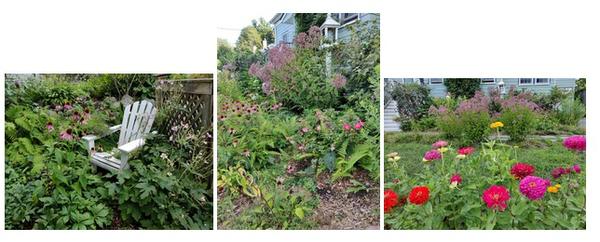
I was away from home and realized I needed a photo of my garden for an upcoming blog post. I texted my neighbor who loves photography for help, and within an hour, I had three photographs of my garden in hand.
As I stared at these pictures, I couldn’t believe what I saw. Instead of seeing unruly weeds, flowers that needed dead-heading, or plants crowding out more fragile ones, I saw a beautiful garden—a peaceful place that looks like it receives attention and care. This moment made me realize that I need to spend more time admiring, and less time fixing. My garden isn’t a “to-do” list. I created it so our family could enjoy it together.
I realize this happens at school too. When I walk into someone else’s classroom, I notice the classroom community the teacher and students have created. I see the recent read alouds, the student-created charts, and the student artwork that covers the walls.  As I get ready to teach, the kids tell me how things work.
“Our reading bags are over here.”
“Before we begin reading workshop, we set up our spaces and choose what we want to read.”
“I sit up here so I can see the chart.”
Their directions show how empowered they feel and how proud they are of their classroom community.
When your school “to-do” list feels long, please take a moment to notice what you and your students have created together. Notice how your children listen as you read aloud, the productive buzz during writing workshop, and how excitement builds as students share the books they are reading. These noises and silences tell a beautiful story with moments to cherish.
I’ve been doing the same thing throughout the fall when I’ve arrived home from work. I walk through the garden and notice its beauty—the flowers, the birds, and the way it all works together.  If we take a little time to notice the beauty of what we’ve worked hard to create, perhaps our to-do lists will feel a bit shorter.

Monday Motivator #34 2025-26

  How Teachers Can Benefit From End-of-Year Reflections A teacher mentor shows why reflecting at the end of the year is so important for gro...